
If you’ve ever found yourself captivated by the bold patterns and vibrant colors of African cichlids, the OB Peacock Cichlid is likely one of the fish that stole your heart. With their speckled beauty and hybrid origins, OB Peacocks have become a staple in aquariums worldwide.
But what is an OB Peacock Cichlid, exactly? How do they differ from standard Peacocks or other OB types, such as the Red Zebra? And how do you distinguish between male and female OB Peacock Cichlids?
Let’s get into the breathtaking realm of OB Peacock Cichlid fish, revealing all about their genetics and coloring, along with care advice, gender identification, and hybrid characteristics.
What Is an OB Peacock Cichlid?
The OB in OB Peacock Cichlid means “Orange Blotched.” This is an allusion to their distinctive speckled or blotched coloration, something that is not seen in wild Peacock Cichlids (Aulonocara species), but the consequence of selective hybridization under domestication.
These cichlids don’t naturally occur in the wild; they are a hybrid, usually created when an OB Red Zebra female is crossed with a male Peacock Cichlid.
OB Peacock Cichlids have astonishing color combinations, active behavior, and strong personalities, and this makes them a favorite among beginner as well as advanced aquarists.
Key Characteristics of OB Peacock Cichlids
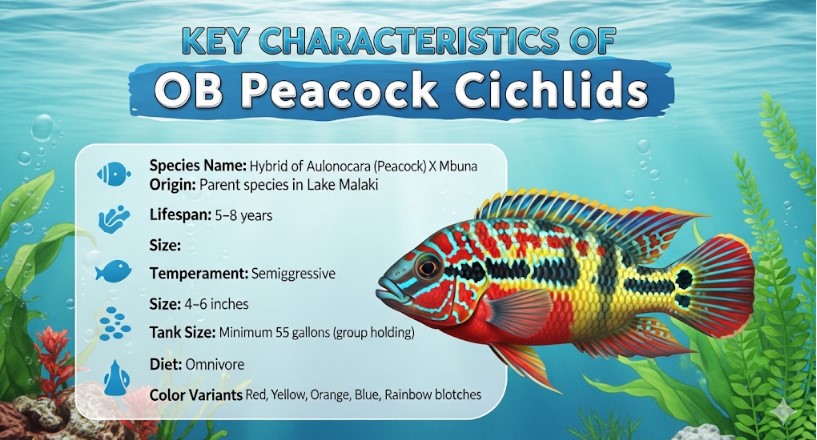
- Species Name: Hybrid of Aulonocara (Peacock) X Mbuna
- Origin: Parent species in Lake Malawi
- Lifespan: 5-8 years
- Size: 4-6 inches
- Temperament: Semi-aggressive
- Tank Size: Minimum 55 gallons as a group holding
- Diet: Omnivore
- Color Variants: Red, Yellow, Orange, Blue, and Rainbow blotches
Why Are OB Peacock Cichlids So Popular?
- Visual Appeal: The random blotches of contrasting colors result in each OB Peacock being distinctive.
- Hybrid Vigor: They are generally hardy from crossbreeding.
- Aquarium Centerpiece: Their colors pop in any cichlid aquarium.
- Active Swimmers: They’re fun to observe and get along well with others.
OB Peacock Cichlid Color Variants
OB Peacocks are perhaps the most thrilling of all because of the variety of colors that they are available in. This is due to several generations of selective breeding. Some of the most popular types are as follows:
Red OB Peacock Cichlid
- Dark red base with black or dark blotches.
- Generally known as the Red Emperor OB Peacock Cichlid.
- One of the most impressive and dominant-appearing OB varieties.
Yellow OB Peacock Cichlid
- Golden yellow body with blue or orange spots.
- Often mistaken for yellow Mbunas but has slender fins and facial markings.
Blue OB Peacock Cichlid
- Uncommon variety with a steel blue base and heavier blotches.
- Generally males have more vibrant coloring.
Rainbow OB Peacock Cichlid
- A mix of red, orange, blue, and yellow across the body.
- Highly variable, no two Rainbow OBs look the same.
Each color type has its own following, and we’ll be writing separate in-depth guides on every OB color variant soon.
OB Peacock Cichlid Male vs Female: How to Tell the Difference
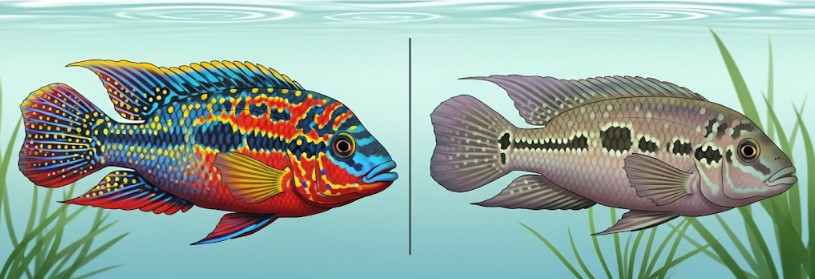
Sexing OB Peacock Cichlids can be difficult, particularly due to the fact that females are commonly used for breeding out the OB pattern.
The following is how to sex them:
Male OB Peacock Cichlid Characteristics
- Vibrant and more intense coloration
- Longer, pointed dorsal and anal fins
- More aggressive and territorial behavior
- Grow egg spots on anal fins
Female OB Peacock Cichlid Characteristics
- Blunted or more subdued coloration
- Shorter, rounded fins
- Less aggressive
- No or very faint egg spots
Tip: Color alone isn’t enough. Always look at a combination of traits, especially in juveniles.
Also Read: Discovering the Stunning Red Peacock Cichlid: Care and Colors
Difference Between OB Red Zebra Cichlid and OB Peacock Cichlid
This is perhaps one of the most commonly asked questions by aquarists.
OB Red Zebra Cichlid:
- Of the Mbuna group from Lake Malawi.
- More aggressive and territorial.
- Squatter, more compact body.
- Less vivid color spectrum, usually orange/red with dark spots.
OB Peacock Cichlid:
- A hybrid of Peacock (Aulonocara) and Mbuna.
- More balanced temperament (semi-aggressive).
- Longer fins, slightly more elegant body shape.
- More color variety and uniqueness.
If you’re looking for a more aesthetic fish with manageable aggression, the OB Peacock Cichlid is the better choice.
German Red Peacock Cichlid and OB Hybrid
Some OB Peacocks are the result of breeding with German Red Peacock Cichlids, a popular and vividly red line of Aulonocaras.
These hybrids have a tendency to display:
- Brighter red/orange coloration
- Improved fin extensions
- Blended blotching patterns based on the Mbuna parent
Not formally recognized as a species, these hybrids are instead sold as “OB German Red Peacocks” and are well sought after by collectors.
Compatibility of Cichlid OB Peacock
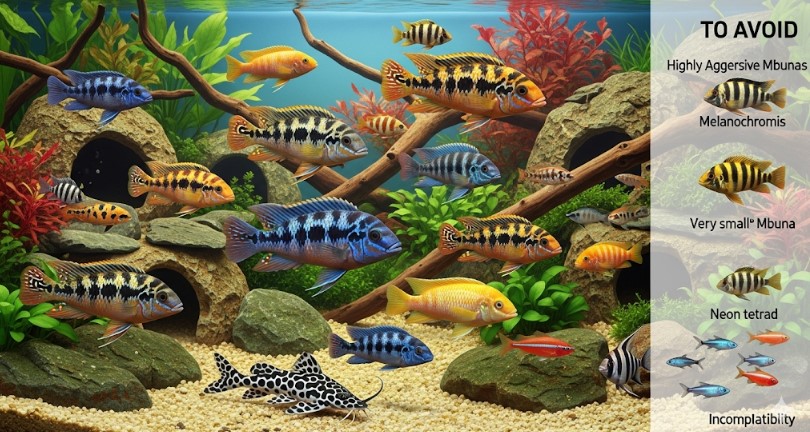
Although being semi-aggressive, OB Peacocks can thrive in community cichlid tanks provided they are properly matched.
Best tankmates:
- Other Peacock Cichlids
- Haplochromis species
- Less aggressive Mbunas
- Synodontis catfish
Avoid:
- Highly aggressive Mbunas such as Melanochromis
- Very small or shy fish
- Overcrowding or under-decorated aquariums
- Always have hiding places using rocks and caves, to avoid dominance battles.
OB Peacock Cichlid Feeding Guide
They are omnivorous and like variety in their food. In captivity, try to have:
- Staple diet: Cichlid pellets
- Supplements: Spirulina, krill, mysis shrimp, and blanched vegetables
- Avoid: Feeding too much protein (can lead to Malawi bloat) or overfeeding
- Feed little portions 1-2 times a day and monitor for uneaten food.
OB Peacock Cichlid Breeding Behavior
OB Peacocks can be bred, but as hybrids, offspring can color show wide variations. Most OB characteristics are derived from the females, meaning OB females have a better chance at reproducing OB-patterned offspring.
Fast Breeding Facts:
- Mouthbrooders: Females mouthbrood fertilized eggs for 21-28 days.
- Male Role: Spawning site construction and display for female attraction.
- Care Tip: Remove females after breeding to prevent male stress.
OB Peacock Cichlid Common Health Issues
As with most African cichlids, OB Peacocks are robust but are susceptible to:
- Malawi Bloat
- Ich (white spots)
- Fin Rot
- Gill Flukes and Internal Parasites
Prevention Tips:
- Maintain stable water parameters.
- Quarantine new fish.
- Don’t stock too many or feed too much.
Growth Stages of OB Peacock Cichlid: From Fry to Full Color
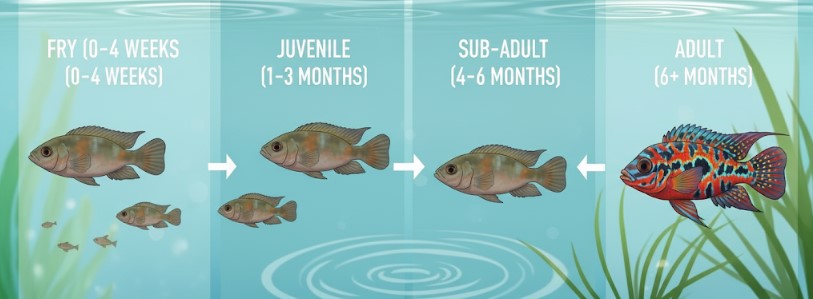
Observing an OB Peacock Cichlid develop from fry to a healthy adult is a thrilling experience. Some fishkeepers prefer to keep OB juveniles solely to see them change color.
Life Stages:
Fry (0–4 weeks):
- Small, generally greyish or pale in color.
- Survived on baby brine shrimp or powdered flakes.
Juvenile (1–3 months):
- Begin developing faint blotches or streaks of color.
- Sex is not yet recognizable.
- Quickest growth occurs at this stage.
Sub-Adult (4–6 months):
- Rounded-out color definition starts.
- Early indications of dominant males showing up.
Adult (6+ months):
- Color fully developed.
- Males become more territorial.
- Females become brooders if breeding conditions are appropriate.
- Patience is rewarded, colors can continue to develop well past the 9–12 month point!
Common Myths About OB Peacock Cichlids
As beloved as they are, OB Peacocks are shrouded in myths. Let’s debunk some of them:
Myth 1: OB Peacocks Are Purebred
Truth: They are hybrids and frequently bred from Mbuna and Peacock combinations.
Myth 2: All OBs Are Male
Truth: OB coloring can be inherited through females, and numerous OB females are utilized in breed programs.
Myth 3: You Can Tell Gender by Color Alone
Truth: Color is an indicator, not a rule. Fins, behavior, and body type are stronger indicators.
Myth 4: OBs Can Be Housed with Any Fish
Truth: Compatibility is based on aggression levels, tank size, and environmental enrichment. Knowing these facts helps provide improved care and realistic expectations.
How to Select a Healthy OB Peacock Cichlid
When purchasing an OB, there are several important signs to check for when bringing home a healthy fish:
Look For:
- Clear, bright eyes (no clouding)
- Even respiration, not gasping
- Intact fins with no rot or tears
- Active swimming, not cowering in the corner
- No white spots, lesions, or bloating
Ask the Store:
- What do they eat the OBs on?
- Are they kept with feisty Mbunas?
- How long have they been in the tank?
A superior quality OB Peacock Cichlid should already demonstrate early blotching, even as a young fish.
Tips for Improving OB Peacock Cichlid Color
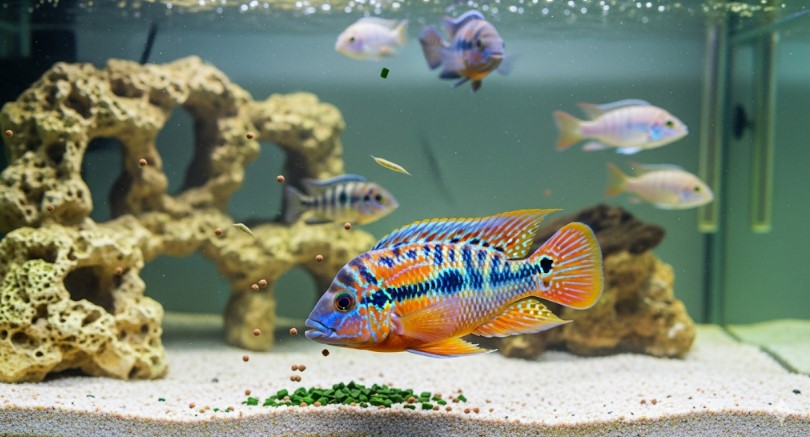
Genetics are the main consideration, but you can assist your OB to show its optimum color by:
- Feeding high-quality spirulina-rich food with krill and carotenoids.
- Allowing plenty of room to minimize stress.
- Adding natural caves and rocks to replicate their natural environment.
- Restricting nasty tankmates that could diminish your OB’s color intensity by causing stress.
- Regular lighting but not extreme, sufficient for display, not stressful.
In time, your OB will be more intense in color, particularly in dominant males.
Are OB Peacock Cichlids Suitable for You?
Keeping OB Peacocks as pets is a dedication, but one that’s richly repaid in visual terms.
Ideal For:
- Intermediate aquarists (because of aggression control)
- Community tank keepers who keep cichlids
- Hybrid variation breeders interested in them
- Hobbyists who enjoy striking, constantly changing coloration
Not Suitable For:
- Serenity community tanks (such as guppies or neon tetras)
- Small tanks smaller than 40 gallons
- Aquarists who desire non-hybrid only in their tanks
If you like showy, stunning fish with a big personality to match, OB Peacocks are an elite choice.
Final Thoughts
The OB Peacock Cichlid is an incredible hybrid that adds character and brilliant color to any aquarium. Its varied variety of color mutations, controllable temperament, and distinct heritage make it no wonder that OB Peacocks remain one of the top choices among African cichlid aficionados.
Whether you are searching for a Red Emperor OB Peacock Cichlid, a Yellow OB, or a Rainbow spotted gem, there is an OB for all aquarists.
From sex ID and hybrid information to color varieties and care, we hope that this guide has covered all of your burning inquiries. And if you’re still thinking, what is an OB Peacock Cichlid, it’s not just a fish; it’s a living work of art.
FAQs
1. How is the OB Peacock Cichlid different from the normal Peacock Cichlid?
Normal Peacocks are members of the Aulonocara genus and have more consistent coloration patterns. OB Peacocks are hybrids and contain Mbuna genetics, which makes them have blotchy, random colors and a bit more aggression.
2. How can I determine whether my OB Peacock Cichlid is male or female?
Observe the color (males are more intense), fin shape, and egg spots. Females tend to have duller colors and more rounded fins.
3. Can I keep OB Peacock Cichlids with other African cichlids?
Yes, but best to house them with other cichlids of the same size and disposition. Keep away from very aggressive Mbunas or very docile species.
Also Read: What Are the Most Popular Types of Peacock Cichlids?
References:
Aulonocara koningsi, Species Summary
https://www.fishbase.se/summary/SpeciesSummary.php?genusname=Aulonocara&speciesname=koningsi
Aulonocara koningsi Conservation Status
https://www.iucnredlist.org/species/57482541/58340661
Tank Colour Shapes Larval Survival, Growth, and Endocrine Response in Cichlasoma dimerus
https://www.ncbi.nlm.nih.gov/pmc/articles/PMC12896578
Selective Breeding in Aquaculture: An Introduction
https://link.springer.com/content/pdf/10.1007%2F978-90-481-2773-3.pdf
Nitrite, Its Toxicity to Fish
