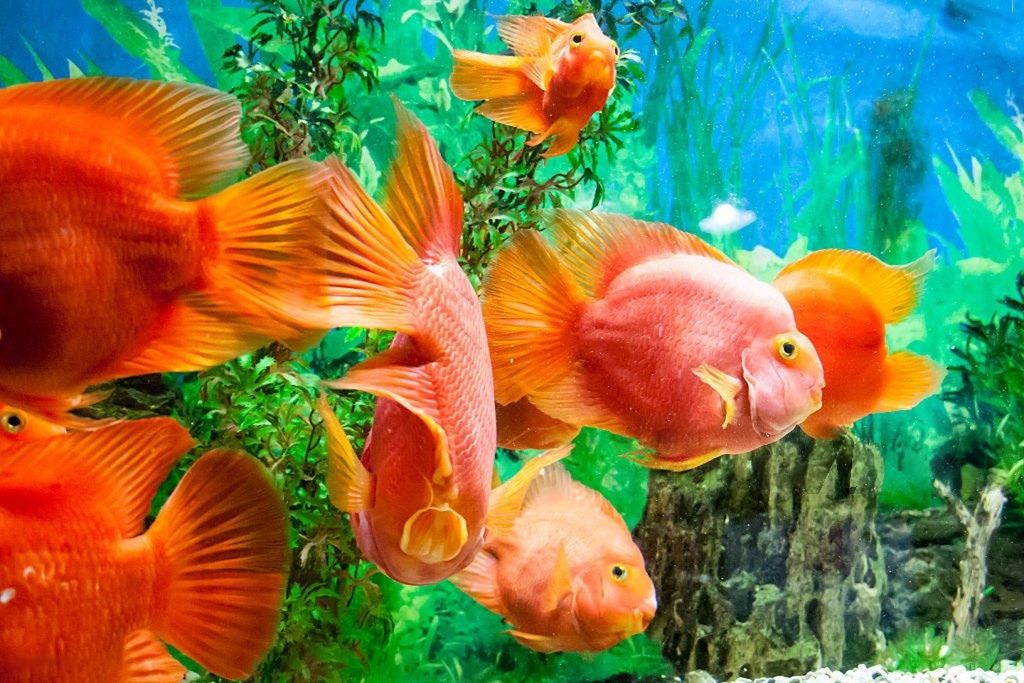
Aquarium hobbyists tend to favor bright, lively, and wise fish that add color and character to the aquarium. Amongst the most sought-after and showy possibilities is the Peacock Cichlid, an imposing freshwater fish as fascinating as it is stunning.
Originating in Lake Malawi in East Africa, the cichlids present in metallic hues, a controllable size, and a half-aggressive nature that could be tamed with proper care and habitat. Here in this detailed guide, you will learn all about peacock cichlid fish, from care guides to tips on breeding, tank setup, color varieties, differences between males and females, and more.
Whether an experienced or new aquarist, you will be able to give the best life to your gorgeous cichlids with this guide.
What is a Peacock Cichlid
Peacock Cichlid is a blanket term to refer to many of the Aulonocara species, all of which are found in Lake Malawi. These cichlids have some of the most striking coloration patterns, active swimming, and clever behavior.
Quick Facts:
- Scientific Name: Aulonocara spp.
- Place of Origin: Lake Malawi, East Africa
- Life Span: 5 to 8 years
- peacock cichlid size: Generally 4 to 6 inches
- Temperament: Semi-aggressive
- Type of Water: Freshwater
- Diet: Omnivorous
They thrive in a properly maintained, stable aquarium and reward hobbyists with vibrant colors and lively personalities.
Why Are Peacock Cichlids So Popular?
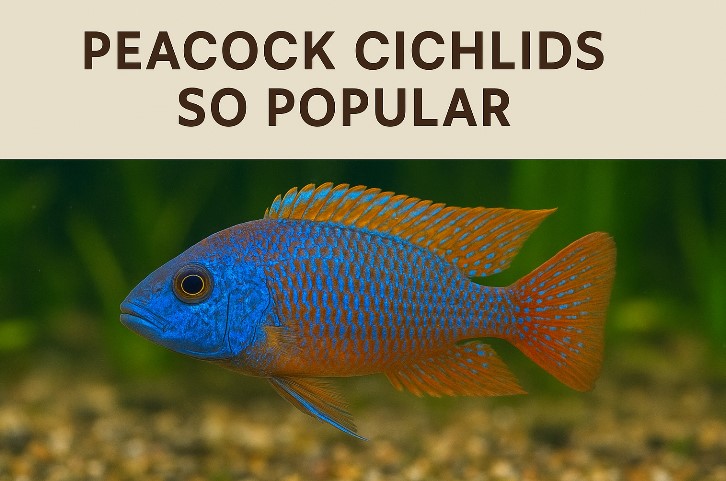
Peacock cichlid species are no mystery after seeing them in action. They have dazzling, near-metallic colors that glow under aquarium lighting, on par with saltwater species to look at, but needing freshwater care.
The reasons for their popularity are:
- Extensive color variation in brilliant morphs
- Active but controllable behavior
- Breeding behaviors that intrigue aquarists
- Congruence with other Malawi cichlids in suitable conditions
- Availability in most U.S. aquarium stores.
How Big Do Peacock Cichlids Grow?
Peacock cichlid is 4 to 6 inches long and is bigger than the female. With ideal conditions, some can grow to be as large as 7 inches, though it is not very common in tanks.
Growth variables are:
- Tank size (minimum 55 gallons recommended)
- High quality food and varied diet
- Regular maintenance and water changes
- Genetic descent
For proper growth, do not overstock your tank and provide a lot of swimming space.
What’s the Optimal Temperature of a Peacock Cichlid Tank?
Having a healthy environment is important for your peacock freshwater fish, and temperature of the water is critical to their health. The perfect temp for cichlid tank should range between 78°F to 82°F.
Tips to maintain optimal temperature:
- Use an excellent quality aquarium heater
- Position the tank away from direct sun and draught
- Monitor temperature daily with a digital thermometer
- Avoid abrupt changes in temperature
Consistency in temperature is a stress- and disease-prevention measure in these delicate fish.
Knowing the Natural Habitat of Peacock Cichlids
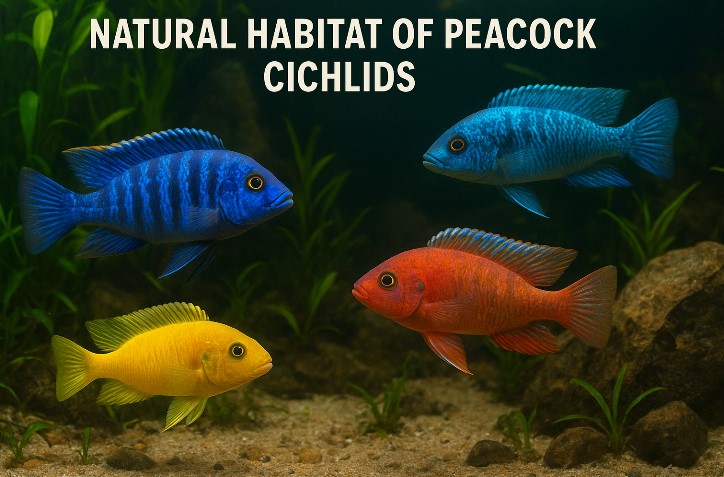
To appreciate peacock cichlid fish most, it’s useful to be aware of where they come from. They live in the clear, tropical waters of Lake Malawi, gliding above sandy bottoms and rocky outcroppings.
Lake Malawi habitat characteristics:
- 7.8 to 8.6 pH levels
- 10-20 dGH water hardness
- Rocky and sandy lakebed
- Crystal clear visibility
Replicating this environment with sand substrate, rocks, and stable water parameters will have your cichlids settled right in.
Peacock Cichlid Water Parameters and Tank Maintenance
Ensuring the proper amount and quality of water is crucial for peacock cichlids. It’s the difference between fish that are bouncy and vibrant in color and fish that look dull, hide all over the place and become sick within the first few months.
The positive is that once your tank can be stable it will remain stable. With a little knowledge, you can achieve only what you want.
- Water parameters to maintain
- pH:alkaline 7.8 to 8.6 (just like Lake Malawi)
- Length: 88 inches (225 cm)
- Temperature: 78°F to 82°F
- Hardness (dGH): 10 to 20
- Ammonia: 0 ppm
- Nitrite: 0 ppm
- Nitrate: below 20 ppm
Test your water every week with a liquid test kit. Paper strips look convenient but they are notoriously unreliable for the pH and hardness levels these fish need. A liquid kit like the API Master Test Kit is a one-time purchase that will protect your fish for years.
Weekly maintenance routine
- Change 25 to 30% of the water every week
- Always dechlorinate tap water before adding it to the tank
- Match the temperature of new water to the tank — cold water shocks them
- Vacuum the substrate lightly to remove waste buildup
- Clean filter media monthly using tank water, not tap water
Use a liquid water test kit to test water weekly. Paper strips appear to be convenient but their pH and hardness reading is unreliable. So a liquid kit such as an API Master Test Kit is a one-off investment that will keep your fish safe for years.
Male vs Female Peacock Cichlid: What to Look For
Being able to understand the difference between male vs female peacock cichlid is helpful, especially for breeding or avoiding aggression. The differences are subtle but noticeable with experience.
Males:
- Bright, vibrant colors (blue, red, orange, yellow)
- Slightly larger
- Egg spots on the anal fin
- More territorial, particularly when breeding
Females:
- Gray, silver, or brownish
- Smaller and less aggressive
- No egg spots
- Less likely to display dominant behavior
You might have trouble sexing young fish, but adults will have these differences evident.
How Do Peacock Cichlids Breed?
Breeding peacock cichlids can be an interesting experience to witness. Peacock cichlids are maternal mouthbrooders, which means the female holds fertilized eggs in her mouth until they hatch, usually within 21 to 28 days.
Breeding Setup Tips:
- 1 male to 3 females to avoid harassment
- Include caves or flat rocks for spawning
- Maintain the temperature consistent at 80°F
- Provide a stress-free tank with excellent water quality
After releasing fry, you may divide them into a grow-out tank or leave them with the parents based on your setup and objectives.
Common Color Varieties of Peacock Cichlid Fish
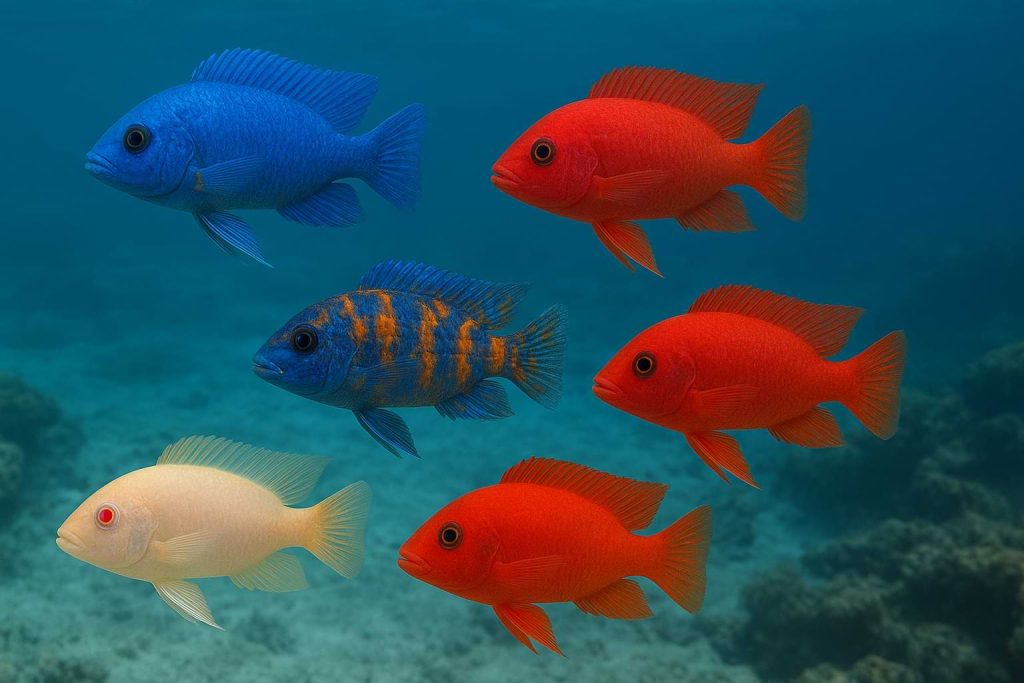
Of the many characteristics that make peacock fish desirable, possibly the most attractive one is their dazzling coloration. There are a variety of color morphs, with each of these having their own followers and characteristics. Although all peacock cichlids belong to the same genus, selective breeding has resulted in dozens of impressive colors.
Most Sought After Peacock Cichlid Colors:
- Electric Blue Peacock – Bright blue neon
- Red Peacock – Fuchsia red with undertones of blue
- Sunshine Peacock – Light yellow with light blue highlights
- OB Peacock (Orange Blotch) – Random splotches of orange, black, and blue
- Dragon Blood Peacock – Rich red-pink tones with a solid appearance
- Albino Peacock – Pale white-gold body with red eyes
- Strawberry Peacock – Pink-red hues with iridescent shine
- Fire Fish Peacock – Intense red/orange with high color contrast
Each variety brings a different feel to your tank. We’ll explore every color morph in detail in future blogs.
How to Install a Peacock Cichlid Tank
Installing the proper tank is important to the well-being and happiness of your peacock cichlid. These fish need room, structure, and good water quality.
Peacock Cichlid Tank Setup Guide:
- Tank Size: Minimum 55 gallons (75+ for bigger groups)
- Substrate: Crushed coral or fine sand
- Décor: Rocks, caves, and hiding places (replicates Lake Malawi)
- Water Temp: 78°F to 82°F
- pH: 7.8 to 8.6
- Filtration: Strong and effective, with good biological media
- Lighting: Moderate to bring out colors but not extreme
Do not keep them with very aggressive cichlids or very delicate species. Keep them with other non-aggressive Malawi species and some bottom dwellers such as Synodontis catfish.
Are Peacock Cichlids Aggressive?
Although peacock cichlid fish are generally more peaceful than most African cichlids, they can become territorial, particularly males.
Signs of Aggression:
- Chasing other fish
- Flaring fins
- Claiming individual caves or rocks
- Harassment during breeding season
Reducing Aggression in Cichlid Peacocks:
- Maintain a healthy male-to-female ratio (1:3)
- Have lots of hiding places
- Keep the tank spacious
- Reorganize décor to disrupt territories
- Don’t overcrowd
Your tank can be peaceful and active if it is well-balanced.
Female Peacock Cichlid Behavior: What to Expect
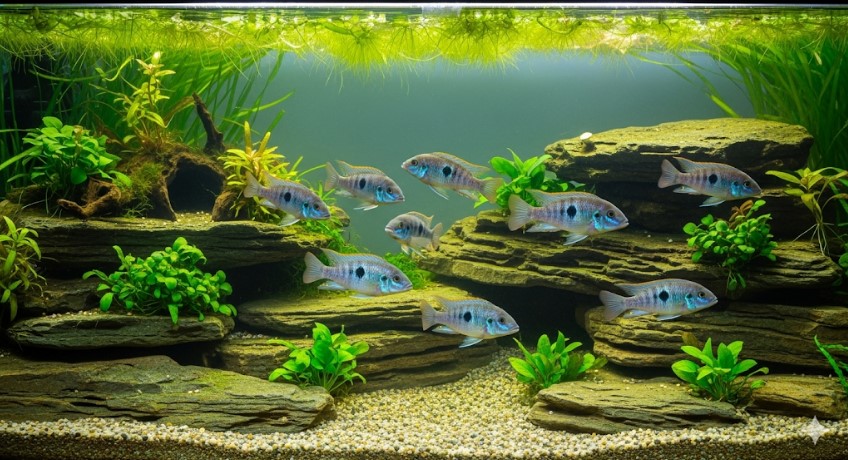
Female peacock cichlids remain in the background, less assertive and less colored, but play a vital role in social harmony and breeding health. They tend to be more tolerant and social than male.
Tips:
- Watch for signs of stress or bullying in females
- Add 2–3 females for each male to split attention
- Don’t overexpose females to dominant males without shelter
Happier females will be more willing to breed and exhibit subtle interaction with other fish in the tank.
Feeding Your Peacock Cichlids
A proper diet ensures vibrant color and a healthy immune system. Since peacocks are omnivores, diversity is the key.
Diet Tips:
- High-quality pellets as a staple
- Frozen or live foods occasionally
- Vegetable matter like spirulina flakes
- Stay away from high-protein, fatty foods
Feed them twice daily in small amounts. Remove uneaten food within 5 minutes to prevent water quality issues.
How Diet Affects Peacock Cichlid Color (add to existing feeding section)
Why your peacock cichlid might be losing color
This is one of the most common questions new peacock cichlid owners ask, and the answer almost always comes down to diet.
The reds, oranges, and deep yellows that make these fish so striking come from compounds called carotenoids. Peacock cichlids cannot produce carotenoids on their own — they have to eat them. A diet without natural carotenoid sources will fade even the most vibrant Electric Blue or Red Peacock over time, no matter how clean the water is.
Best foods for strong color
- The pigments that give reds and oranges their color are also found in krill and brine shrimp, and they are packed with them.
- Synthetic pelleted media, blue/purple, green, and black.Synthetic pelleted media, blue/purple, green, and black.They feed on Daphnia naturally in their diet in Lake Malawi, and it is great for their digestion.
- Blanched spinach or zucchini – provides fibre and helps maintain the health of the gut
Don’t do this one at all:
In some cichlid communities, beef heart and other mammal protein is a favored treat, but peacock cichlids are not able to easily digest animal fats. One of the common causes of Malawi bloating is giving it on a regular basis. Only use proteins from fish and plant sources.
For pellets, choose those that are cichlid-specific, with a crude protein level of 38 – 42%, and crude fat less than 6%. The size of the pellets should be 2-3mm for adults, and 1mm or finely crushed for juveniles.
Common Peacock Cichlid Diseases and How to Treat Them
Even the best-kept tanks can have health problems. The key to recovering fish vs. non-recovering fish is knowing what to look for and how to respond rapidly!
Malawi bloat
The “must know” disease for all peacock cichlid owners. The belly becomes noticeable, fish will not feed, breath quickly and will sit at the bottom. It moves quickly, fish can go from fine to critical within 48 hours.
It is caused by internal parasites, overfeeding protein-heavy foods, or poor water quality. Treat immediately with Metronidazole and do a 30% water change the same day. Cut out all mammal-based proteins like beef heart from the diet going forward. Prevention matters far more than treatment here.
Ich (white spot disease)
Tiny white dots on the fins and body that look exactly like grains of salt. Usually triggered by a temperature drop or a stressful event. Raise the tank temperature gradually to 82°F and treat with an ich-specific medication over 7 to 10 days. Catch it early and it clears up cleanly.
Fin rot
The edges of the fins look frayed or are turning white and receding. Almost always a water quality problem. Do a 30% water change first and test your parameters before reaching for medication. If the fins do not improve within a week, add an antibacterial treatment like Seachem Kanaplex.
Swim bladder disorder
Fish swimming sideways, floating at the surface, or struggling to stay upright. Usually caused by overfeeding or gulping air. Fast the fish for two to three days. A small piece of blanched, de-skinned pea can help if constipation is the cause.
The rule that covers all of these
Any time a fish hides more than usual, loses color, stops eating, or rubs against rocks — test your water before anything else. In most cases, poor water quality is the root cause and a water change is the first step to fixing it.
Final Thoughts
The Peacock Cichlid is not just a face to look at; it’s an energetic, charming, and mysterious fish. With dozens of shiny varieties, low-maintenance care needs, and interactive tendencies, these cichlids are ideal aquarium selections for beginners and experts alike.
By understanding their size, habitat, tank design, and social interactions, you can ensure they enjoy a long, healthy life in your aquarium for many years to come. Tune in for the next part, as we delve deeper into each color variation, because every peacock fish should get the attention it was meant to receive.
FAQs
1. How to reduce aggression in my cichlid peacocks?
- Space out territories with rocks and caves
- Maintain proper male-to-female ratios
- Introduce fish at the same time to reduce dominance issues
- Rearranging tank décor occasionally helps break aggressive cycles
2. How to set up a peacock cichlid tank?
- Use 55+ gallon tank with sand substrate
- Add rocks and hiding places
- Set water temperature to 78–82°F and pH to 7.8–8.6
- Supply strong filtration and aeration
3. How to determine gender of peacock cichlid?
- Males: Vibrant colors, large size, egg spots
- Females: Paler color, small, no egg spots
4. How to determine if a peacock cichlid is male or female?
- Watch for color, finnage shapes, and demeanor
- Males are dominant and more brightly colored
- Females are more docile and grayish
5. Is peacock cichlid fish aggressive?
- They may be semi-aggressive, particularly males.
- A good tank setup and stocking can reduce aggression.
Who are the best fish to place in a tank with peacock cichlid fish?
Here are the best tank mates of peacock cichlid fish:
- Other Peacock Cichlids.
- Yellow Lab Cichlid (Labidochromis caeruleus)
- Electric Blue Hap (Sciaenochromis fryeri)
- Synodontis Catfish
- Clown Loaches (Chromobotia macracanthus)
- Bristlenose Pleco (Ancistrus sp.)
- Red Empress Cichlid (Protomelas taeniolatus)
- Rainbowfish (Melanotaenia spp.)
How to Determine if a Peacock Cichlid Is Male or Female?
Males and females can be identified by examining the vent area under magnification.
References
UNESCO World Heritage Centre, Lake Malawi National Park. Official documentation of Lake Malawi’s water ecosystem, cichlid biodiversity, and its designation as a site of global importance.
https://whc.unesco.org/en/list/289
Aqueon, Freshwater Aquarium Water Quality: The Nitrogen Cycle & Optimal Water Chemistry. Industry reference on ammonia conversion, tank cycling, and safe water parameters for freshwater fish.
https://www.aqueon.com/articles/freshwater-aquarium-water-quality
Malawi Bloat. Research-backed documentation of Malawi bloat causes, necropsy findings, and metronidazole treatment protocols for African cichlids.
https://aquariumscience.org/11-3-malawi-bloat/
ScienceDirect / Veterinary Clinics of North America, chthyophthirius multifiliis. Peer-reviewed overview of white spot disease in freshwater fish, including temperature-based treatment and immune response findings.
PubMed Central (NCBI), Biological Function of Astaxanthin and Its Application in Aquatic Animal Feeding. Peer-reviewed study on carotenoid supplementation and its direct effect on ornamental fish coloration.

This article answered many of my questions about Peacock Cichlid care and maintenance
As someone new to Peacock Cichlids, I found this guide incredibly helpful. Thanks for breaking everything down so clearly
Great article
I really appreciate how you explained Peacock Cichlid care, tank requirements, diet, and water parameters in a simple and easy-to-understand way. Many new fishkeepers struggle to find reliable information, but this article covers the essentials clearly. The practical tips and detailed explanations make it a great resource for anyone considering keeping Peacock Cichlids. Looking forward to reading more aquarium guides like this!
I’ve been thinking about getting peacock cichlids, and this answered a lot of the questions I had as a beginner. I especially liked the tips on tank setup and water conditions. Thanks for putting everything together in such an easy-to-understand way!