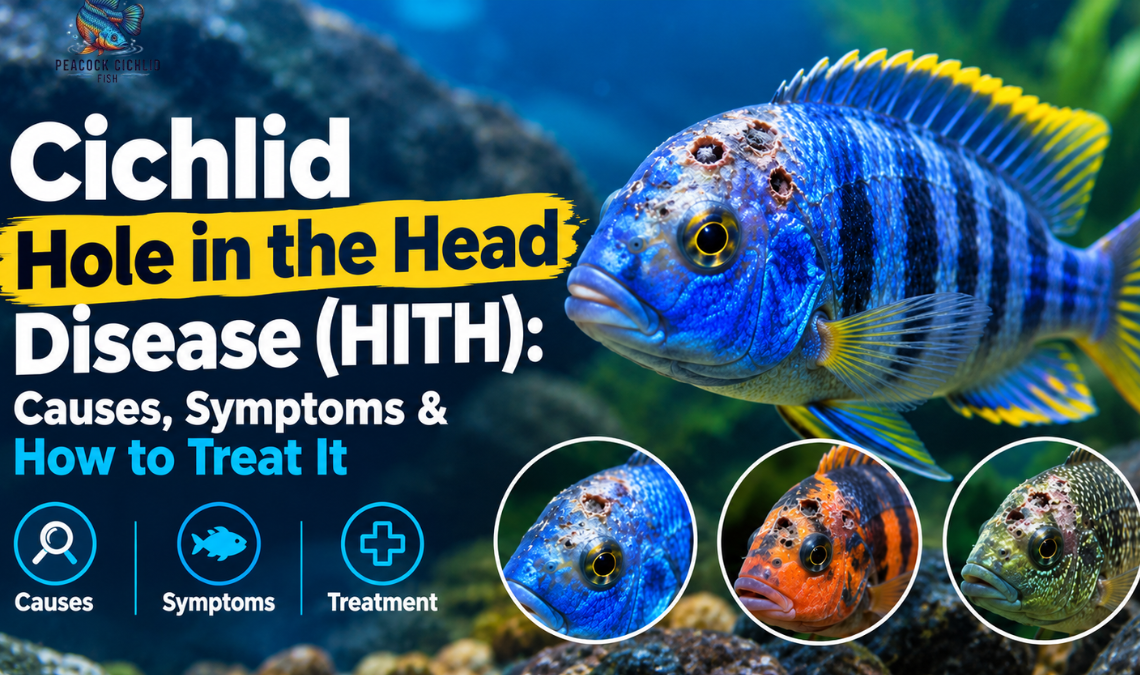
A few tiny pits on a cichlid’s head may seem harmless at first. Within weeks, those pits can become deep lesions that damage healthy tissue.
Cichlid hole-in-the-head disease, commonly called HITH, describes erosions around the head and sometimes the lateral line. Cichlids, especially Oscars and Discus, can develop these lesions.
HITH does not always have one clear cause. Poor water quality, stress, nutrition, parasites, and secondary infections can all contribute.
Knowing what to look for can help aquarium keepers act before a small problem becomes severe.
What Is Hole-in-the-Head Disease in Fish?
Hole-in-the-head disease causes pits, erosions, or ulcers around a fish’s head. The condition appears most often in freshwater cichlids.
The name describes the visible damage rather than one specific disease organism. Several factors can cause similar lesions, so proper assessment is important.
What Does HITH Look Like?
HITH often begins with tiny pits around the forehead, eyes, or sensory pores. Early lesions may look like slightly enlarged pores or pale marks.
As the condition progresses, the pits can widen and deepen. Severe cases may develop open sores, tissue loss, and secondary infections.
Which Fish Commonly Develop HITH?
Cichlids are strongly associated with HITH. Oscars and Discus appear frequently in reports involving these lesions.
Other freshwater fish can also develop similar erosive conditions. Therefore, the appearance alone cannot confirm HITH.
What Causes Hole-in-the-Head Disease?
What causes hole-in-the-head disease? Several factors can work together to damage tissue and weaken a fish’s ability to recover.
Poor Water Quality
Poor aquarium conditions can place continuous stress on fish. Excess waste, overcrowding, weak filtration, and inconsistent maintenance can all create problems.
Test ammonia, nitrite, nitrate, pH, and temperature regularly. Correct water problems before adding medication.
Spironucleus and Other Parasites
Spironucleus vortens is documented to cause hole-in-the-head lesions in cichlids. Researchers have identified the parasite in affected Discus and other fish.
The older term “Hexamita” often appears in aquarium discussions. However, not every case of HITH comes from the same parasite.
Other organisms can cause weight loss, digestive disease, or similar-looking lesions. Diagnosis therefore matters before choosing medication.
Stress and Overcrowding
Constant stress can leave fish more vulnerable to disease. Aggressive tank mates, overcrowding, transportation, and sudden environmental changes can all increase stress.
Large cichlids also produce considerable waste. A crowded aquarium can therefore create several problems at once.
Nutritional Problems
A poor or unbalanced diet can weaken overall fish health. Repeatedly feeding one unsuitable food may also leave nutritional gaps.
Old, damp, or spoiled food creates another concern. Fresh, species-appropriate food should form the foundation of a healthy feeding routine.
What Are the Hole in the Head Disease Symptoms?
Hole-in-the-head disease symptoms usually begin with small changes around the head. Later signs can involve appetite, weight, behavior, and overall condition.
Early Signs of Hole in the Head Disease
Early signs of hole in the head disease can include:
- Tiny pits around the forehead
- Enlarged sensory pores
- Pale marks around the head
- Shallow depressions near the eyes
- Early erosion around the lateral line
Affected fish may still eat and swim normally during the early phase. Regular observation can therefore make a major difference.
Advanced HITH Symptoms
More advanced cases may show:
- Deepening holes or craters
- Open sores
- Tissue erosion
- Reduced appetite
- Weight loss
- Weakness
- Increased hiding
- Loss of normal coloration
- Secondary infection
Weight loss deserves particular attention. It may indicate an intestinal problem rather than a skin problem alone.
What Are the Hole-in-the-Head Disease Stages?
No universally accepted medical staging system exists for HITH. Aquarium keepers can still use visible progression to understand severity.
Stage 1: Small Pits
Small pale spots or shallow depressions appear around the head. The fish may show no other obvious changes.
Stage 2: Expanding Lesions
The pits become larger or deeper. Additional areas may appear around the forehead, eyes, or lateral line.
Stage 3: Open Lesions
Deep erosions or sores become visible. Appetite loss, weight loss, and unusual behavior may also appear.
Stage 4: Severe Tissue Damage
Extensive erosion can affect the fish’s appearance and overall condition. Secondary infections may make recovery harder.
Not every fish follows this exact pattern. Some cases stabilize when environmental problems receive prompt attention.
Can African Cichlids Develop Hole in the Head Disease?
Yes. African cichlids can develop HITH-like lesions, although many classic reports involve South American cichlids.
Peacock cichlids can face similar risks when water quality, stocking, nutrition, or stress become problematic.
African cichlid hole-in-the-head disease also deserves careful diagnosis. Other parasites can affect African cichlids and produce serious weight loss or internal disease.
For that reason, do not treat every visible pit as the same condition.
Do Oscars and Discus Get Hole-in-the-Head Disease?
Yes. Oscar hole-in-the-head disease and discus hole-in-the-head disease are common concerns among cichlid keepers.
Oscar Hole in the Head Disease
Oscars grow large and produce substantial waste. Strong filtration, suitable tank space, and regular maintenance become especially important.
Poor water conditions can increase stress and create an environment where health problems become harder to control.
Discus Hole in the Head Disease
Discus can develop HITH-like lesions alongside intestinal parasitic disease. Research has linked Spironucleus vortens with HITH lesions in Discus.
Discus also need stable aquarium conditions. Sudden changes can create additional stress during recovery.
Hole in the Head vs HLLE: What Is the Difference?
HITH and HLLE can look similar, but the terms describe slightly different patterns.
Hole in the Head
HITH usually refers to pits or erosions around the head. Some cases involve parasites, while environmental and nutritional factors can also contribute.
Head and Lateral Line Erosion
HLLE stands for head and lateral line erosion. Lesions can extend across sensory pores on the head and along the lateral line.
The two conditions can overlap visually. A fish keeper should therefore consider water quality, diet, behavior, and other symptoms before deciding what caused the lesions.
How Do You Treat Cichlid Hole-in-the-Head Disease?
Cichlid hole-in-the-head treatment should start with the aquarium environment. Medication cannot fix poor water, chronic stress, or an unsuitable diet.
1. Test the Aquarium Water
Start with ammonia and nitrite. Both should remain at safe levels in a healthy aquarium.
Also check nitrate, temperature, pH, filtration, and waste buildup. Correct any problems before focusing on medication.
2. Improve Water Quality
Perform appropriate water changes based on the aquarium’s condition. Clean accumulated waste and make sure filtration can handle the fish load.
Avoid sudden changes that could create additional stress.
3. Reduce Stress
Look for aggression, overcrowding, inadequate space, or unsuitable tank conditions.
Give large cichlids enough room to swim and establish territories. Suitable hiding areas can also reduce conflict.
4. Improve the Diet
Offer fresh food designed for the species. Use reasonable variety instead of relying on one unsuitable food.
Feed appropriate portions and remove uneaten food before it decomposes.
5. Consider Parasite Treatment
Veterinary guidance may support metronidazole when a susceptible Spironucleus infection causes the problem. Laboratory studies have also shown metronidazole activity against S. vortens.
However, metronidazole does not treat every cause of HITH. The wrong medication can waste time while the underlying problem continues.
6. Isolate the Affected Fish
A separate hospital aquarium can make monitoring and treatment easier. Isolation also reduces the risk of spreading infectious organisms when several fish share the same system.
Keep hospital water stable and well oxygenated.
7. Seek Veterinary Help When Needed
Professional diagnosis becomes valuable when lesions deepen, or the fish stops eating.
A fish veterinarian can examine samples and investigate parasites, bacteria, or other underlying conditions.
What Is the Best Diet to Prevent Hole-in-the-Head Disease?
The best diet to prevent hole-in-the-head disease supports complete nutrition without relying on one special HITH food.
Choose fresh, species-appropriate foods from reputable sources. Store dry food correctly and replace products that become damp or stale.
Avoid feeding excessive amounts. Uneaten food can increase organic waste and worsen aquarium conditions.
Nutrition supports healthy fish, but diet alone cannot guarantee HITH prevention. Water quality and stress control matter just as much.
How Can You Prevent Hole-in-the-Head Disease?
Preventing hole-in-the-head disease starts with consistent aquarium care, not occasional emergency treatment.
Maintain Good Water Quality
Test water regularly and keep filtration appropriate for the aquarium’s bioload.
Perform routine water changes and remove waste before it accumulates.
Feed Fresh, Suitable Food
Choose a balanced diet designed for the species. Keep food dry, fresh, and properly stored.
Avoid using one food as the only source of nutrition for long periods.
Control Stocking and Aggression
Give cichlids enough space to move normally and maintain territory. Remove persistent aggression before injuries and stress develop.
Quarantine New Fish
Quarantine new arrivals before introducing them into an established aquarium. New fish can carry parasites or pathogens without obvious symptoms.
Keep Equipment Clean
Do not move nets, siphons, decorations, or other wet equipment between aquariums without cleaning them properly.
Shared equipment can transfer organisms from one aquarium to another.
Is Hole-in-the-Head Fish Disease Contagious?
HITH itself is not a single contagious infection. Some underlying organisms can spread, while environmental causes cannot.
Spironucleus can occur in the digestive tract of cichlids and other ornamental fish. Poor sanitation and close contact can increase disease risks.
Treat unexplained lesions seriously when multiple fish become affected. Quarantine can help limit potential transmission while the cause remains unclear.
Can Hole-in-the-Head Disease Kill Fish?
Severe HITH can contribute to serious illness and death. Risk increases when lesions become extensive, or another infection affects an already weakened fish.
Severe weight loss and prolonged appetite loss are especially concerning. Correcting water, diet, and stress issues early gives the fish a better chance.
Can Hole-in-the-Head Disease Leave Permanent Damage?
Yes. Small lesions may improve after the underlying problem receives proper attention.
Deep tissue damage can leave scars, pits, or color changes. Recovery can take time, even after the original cause is treated.
When Should a Fish Keeper Seek Expert Help?
Seek professional help when lesions continue growing despite improved aquarium care.
Veterinary attention also makes sense when the fish stops eating, loses significant weight, becomes weak, or develops widespread lesions.
Several diseases can look alike. A proper diagnosis can prevent unnecessary medication and target the actual cause.
How Peacock Cichlid Zone Can Help With Cichlid Care
Healthy cichlids need more than attractive colors and a well-decorated aquarium. Good care starts with clean water, suitable nutrition, proper stocking, and careful observation.
Peacock Cichlid Zone offers cichlid-focused information to help aquarium keepers make informed care decisions. Explore more guides for practical advice on keeping cichlids healthy.
Act Early When Head Lesions Appear
Cichlid hole-in-the-head disease can look alarming, especially when small pits turn into deep lesions.
Start with the basics: test the water, improve maintenance, review the diet, and reduce stress.
Then consider infectious causes when symptoms point in that direction. Do not assume every lesion comes from Hexamita or Spironucleus.
Early attention gives aquarium keepers the best opportunity to correct the underlying problem before serious tissue damage develops.
Also Read: 18 Peacock Cichlid Disease: Symptoms, Causes, and Treatment Guide
Frequently Asked Questions
What is hole in the head disease in fish?
Hole-in-the-head disease describes pits, erosions, or ulcers around a fish’s head. Cichlids commonly develop this condition.
What causes hole-in-the-head disease?
Poor water quality, stress, nutritional problems, and infectious organisms can contribute. Several factors may occur together.
What are the early signs of hole-in-the-head disease?
Tiny pits, pale spots, enlarged pores, and shallow depressions around the forehead often appear first.
Does metronidazole cure hole-in-the-head disease?
Metronidazole can target susceptible Spironucleus infections. It does not cure every HITH case because several conditions can create similar lesions.
Is hole-in-the-head fish disease contagious?
HITH has no single cause. Some infectious organisms can spread between fish, while environmental causes cannot.
Can Peacock cichlids get hole-in-the-head disease?
Yes. Peacock cichlids can develop HITH-like lesions, but several other conditions can create similar signs.
