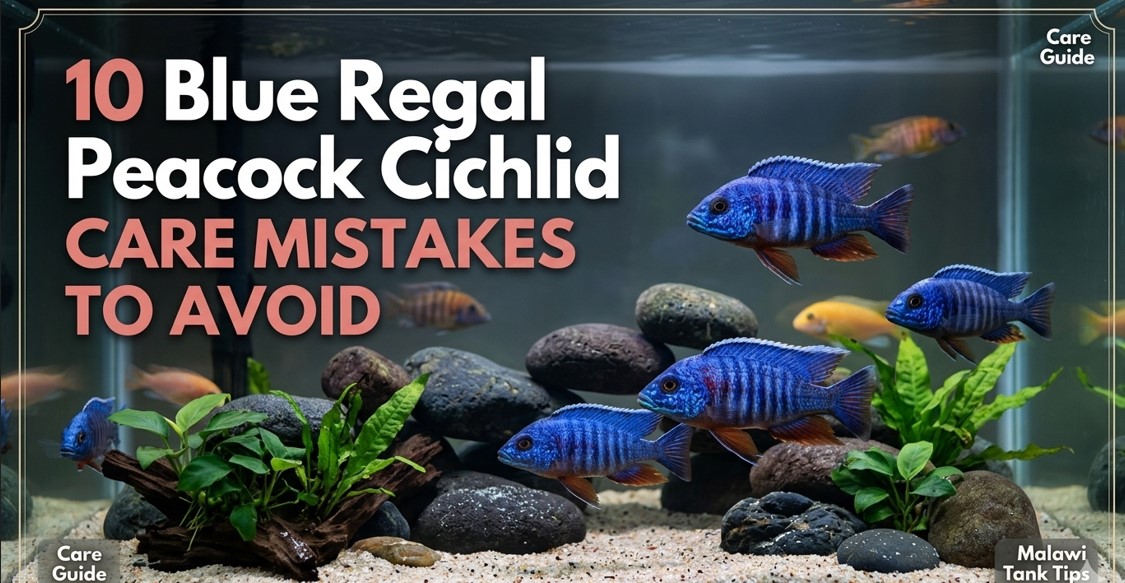
Being the owner of an aquarium holding Blue Regal Peacock Cichlid, you will have an experience of a kind. This is a beautiful fish with several features, though its water sensitivity, food, and equipment must be considered carefully. Even small mistakes can cause stress, dull color, or aggression.
The statistics show that aquarium fish can reach approximately 40% in the first month when the new owner fails to follow the water and positioning procedures and arrangements.
This indicates damage from design errors in the tank and from the water’s overall condition, which may affect the fish’s survival lifespan.
This guide outlines the top 10 common mistakes and precautionary steps to help aquarium owners ensure a healthy, active, and stable environment for their fish.
What is a Blue Real Peacock Cichlid?
Blue Regal Peacock Cichlid is a bright-colored freshwater fish that belongs to the family of Peacock cichlids of Lake Malawi in East Africa. It is characterized by its dazzling metallic blue color, easy-going nature unlike most cichlids, and good looks in the aquarium.
Key Characteristics
- Scientific name: Aulonocara (Peacock cichlids)
- Origin: Sand and rocky regions of Lake Malawi
- Size: It normally grows 5-6 inches (12-15 cm)
- Temperament: Semi-aggressive and can be managed in well-organized tanks
- Coloration: Males are highly coloured and are of electric-blue colour, and the females are duller or gray.
- Diet: Carnivorous, consumes small invertebrates, insects, and cichlid fish.
Why Aquarium Hobbyists Like Them
The blue regal cichlid is appealing to aquarium owners for its bright colouration, gregarious behaviour, and its interesting breeding behaviour. Males are brightly colored, attract females, defend territories, and are aesthetically pleasing in African cichlid aquariums.
Natural Behavior
These fish hunt insects and tiny crustaceans at the bottom of slim sandy lakes in the wild. They are, like most peacock cichlids, maternal mouthbrooders, so the female holds fertilized eggs in her mouth until the fry are sufficiently developed to swim.
The Blue Regal Peacock cichlid is regarded as one of the most beautiful and non-problematic African cichlids in a well-maintained aquarium.
Common Blue Regal Peacock Cichlid Care Mistakes to Avoid
Skipping details in dealing with this species is not exclusive to experienced aquarists. Minor errors in tank preparation, diet, or water stability can soon affect fish health and behavior.
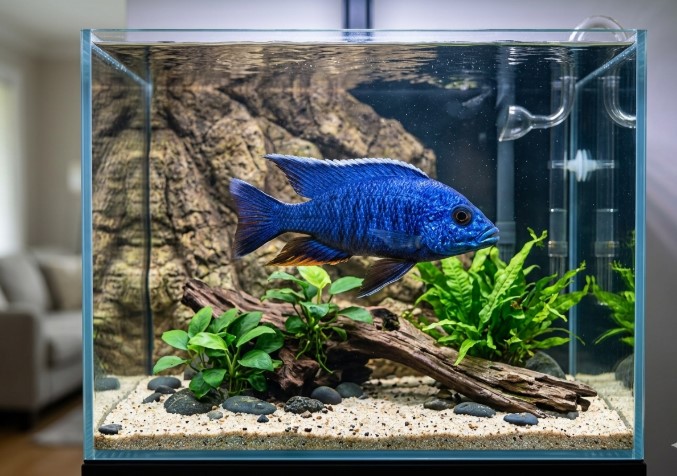
Learning these mistakes will help hobbyists establish a stable environment where their fish are likely to flourish.
Choosing the Wrong Tank Size
It is easy to stress these fish when kept in small or overcrowded aquariums, which leads to aggression.
One to three blue regal peacock cichlids in a 200-250 liter (50-65 gallon) tank is a good choice. This allows sufficient swimming and habitat creation.
The peacock cichlids are territorial. They begin to follow tank mates or chew fins in a limited area. A larger tank with caves and rocks would help to allocate territories and limit conflict.
Ignoring Water Parameters
Unfavorable water standards can quickly damage fish and lead to disease.
Ideal conditions include:
- pH: 7.8–8.6
- Temperature: 24–28°C (75–82°F)
- Hardness of water: moderate to hard.
It is important to test the water every week. Constant water levels promote good immunity and ensure bright colors. African cichlids can experience severe stress due to sudden chemical changes.
Overfeeding or Poor Diet
Overfeeding can lead to bloating and a polluted tank. A balanced diet must contain:
- High-quality cichlid feed
- Frozen or live brine shrimp
- Daphnia or insect larvae
- Occasional vegetable matter
Eating a few small meals a day avoids waste accumulation. Carotenoid-rich foods, including spirulina, can also increase male Blue Regal Peacock coloring.
Choosing the Wrong Tank Mates
Combining fish that do not work normally causes aggression and stress.
Other peaceful African cichlids of the same size make good tankmates for the Blue Regal Peacock Cichlid. Avoid small or overly aggressive fish.
It is useful to observe new fish before permanent introduction, and to identify several caves and hiding places that minimize territorial conflicts.
Neglecting Aquascaping and Hiding Spots
A tank without structure can increase stress levels.
Good aquascaping must consist of:
- Rock formations
- Caves and crevices
- Sand patches for digging
These characteristics replicate natural Lake Malawi habitats and enable fish to form territories.
Aquarists observe that male forms such as Mbenji Blue Regal Peacock are more brightly colored when they control clear territories.
Neglecting Disease Prevention
Bypassing quarantine protocols may bring disease to the aquarium.
Common infections include:
- Ich
- Fin rot
- Bacterial infections
The fish has to be separated and allowed to rest for two to three weeks before being added to the main tank. Stable water parameters and regular surveillance are preventive measures against outbreaks.
Stress in fish immunity may also result from territorial disputes, increasing disease susceptibility.
Sudden Environmental Changes
Aquarium fish can be shocked by sudden changes in water chemistry or temperature.
Gradual adjustments when modifying tank conditions are never unsafe. Regal blue peacock cichlids are sensitive to stress caused by any temperature change (even 1-2 degC) and reduced immunity.
To keep conditions comparable, test kits, thermometers, and good heaters are employed.
Ignoring Breeding Behavior
Poor breeding can cause aggression or overcrowding due to a lack of behavioral understanding.
This species is maternal-mouthbreeding. Females keep their eggs in their mouths between two and three weeks after fertilization.
At this stage, males tend to get territorial. Stress and injury can be prevented by providing them with more hiding areas or breeding tanks.
Not Monitoring Color Vibrancy
An indicator of fish health is color.
Dull colors may indicate:
- Poor diet
- Water quality issues
- Stress from aggression
Quality food, stable water, and equal light intensity help in keeping color vibrant.
With frequent observation, hobbyists can identify signs of health issues in their early stages.
Relying on Generic Fish Care Advice
Standard aquarium recommendations might not apply to African cichlids.
To avoid many pitfalls, it is better to take species-specific recommendations.
Reliable fishkeeping information and professional communities can be a valuable source.
Conclusion
Caring for a Blue Regal Peacock Cichlid requires patience, observation, and attention to detail. Avoiding these ten common mistakes helps maintain a stable environment that keeps fish healthy and colorful.
When aquarists focus on proper tank size, water quality, diet, compatible tank mates, and natural habitat design, they create an aquarium that supports long-term fish health.
By applying these simple practices, hobbyists can transform their tanks into thriving habitats where their fish exhibit natural behavior and brilliant color.
FAQs:
How big does a Blue Regal Peacock Cichlid grow?
Adults usually grow 5–6 inches, with males appearing larger and more colorful.
What is the minimum tank size required for this fish?
A 200–250 liter tank is recommended for one to three fish.
Are Blue Regal Peacocks aggressive toward other tank mates?
They can be territorial, especially males, but compatible tank mates reduce conflict.
What are the ideal water parameters?
Maintain a pH of 7.8–8.6 and a temperature of 24–28°C for optimal health.
How can you tell the difference between a male and a female?
Males are brighter and larger, while females are smaller and have duller colors.
What was the best diet for them?
High-quality pellets, frozen foods, and occasional vegetables support balanced nutrition.
Which tank mates are most compatible?
Peaceful African cichlids of similar size work best.
Are they mouthbrooders?
Yes. Females carry fertilized eggs in their mouths until the fry are ready to swim.
Do they require sand or gravel?
A sandy substrate is preferred because it supports natural digging behavior.
What is their average lifespan?
With proper care, they can live 7–10 years.
References:
Aulonocara stuartgranti Conservation Status
https://www.iucnredlist.org/species/120689838/120689903
Environmental Change Explains Cichlid Adaptive Radiation at Lake Malawi Over 1.2 Million Years
https://www.pnas.org/doi/10.1073/pnas.1611028113
Environmental Change Drove Diversity in Lake Malawi Cichlids
https://www.brown.edu/news/2016-10-03/malawi
FAO (Food and Agriculture Organization of the United Nations)
Water Quality and Fish Health
https://www.fao.org/4/t1623e/T1623E03.htm
University of Florida / IFAS Extension, How Ornamental Fishes Get Their Color

The care tips were clear and easy to follow. The Blue Regal Peacock is definitely one of the most beautiful cichlids out there!