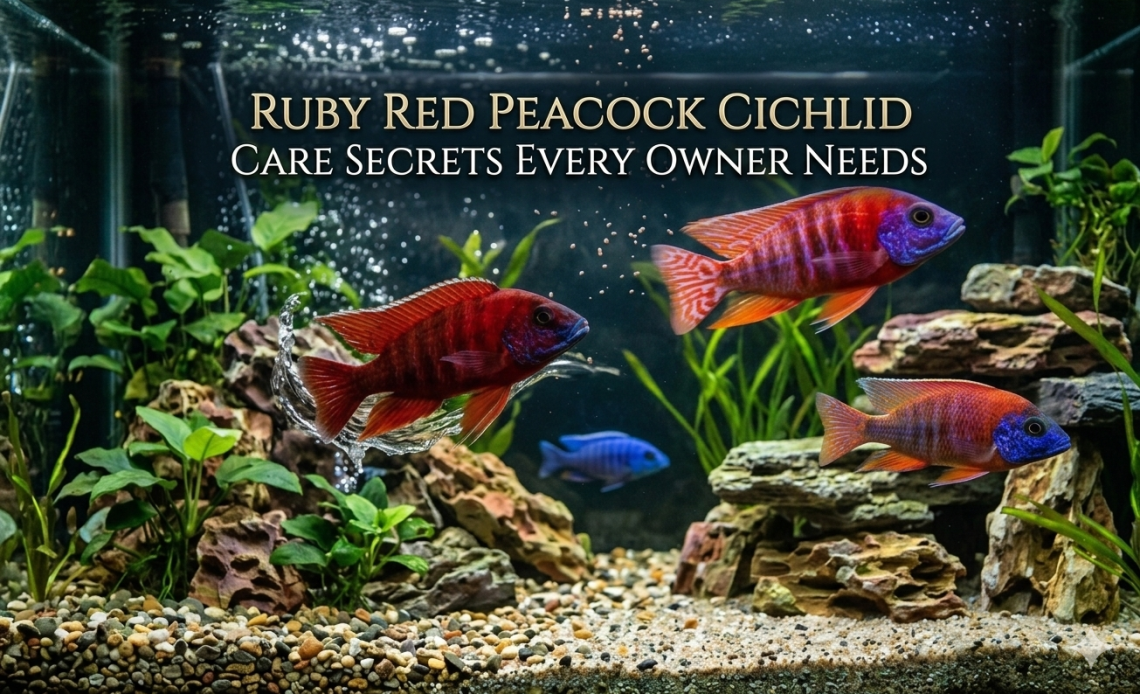
Aquarium hobbyists around the world are captivated by the colorful appearance of peacock cichlids, yet only a few understand theirspectacular origins in Africa.
More than 700 endemic cichlid species are found only in Lake Malawi, several of which are highly valued in home aquaria and biotope systems due to their vivid colors (Wikipedia).
African Rift Lakes, such as Lake Malawi, have ornamental fish that are not only sought after for their beauty but also represent a distinct segment in the international freshwater aquarium market (Wifitalents).
The most exceptional of them is the ruby red peacock cichlid, whose bright red color and unique behaviors are often overlooked by many hobbyists.
In this article, you will discover important care secrets, including optimal tank design and diet plans that enhance color and vitality, helping your aquarium truly flourish.
What Makes the Ruby Red Peacock Cichlid Unique?
Ruby red peacock cichlids are freshwater African fish characterized by their intense red coloration and intricate social behavior.
These are of the genus Aulonocara and originate from Lake Malawi. They exhibit extraordinary color changes that depend on mood, diet, and habitat, unlike many other cichlids.
Their sensitivity to slight fluctuations in water minerals is rarely discussed; even a small increase or decrease in calcium or magnesium can reduce their vibrant coloration.
Many owners overlook these micro-changes, even though they greatly impact color vibrancy.
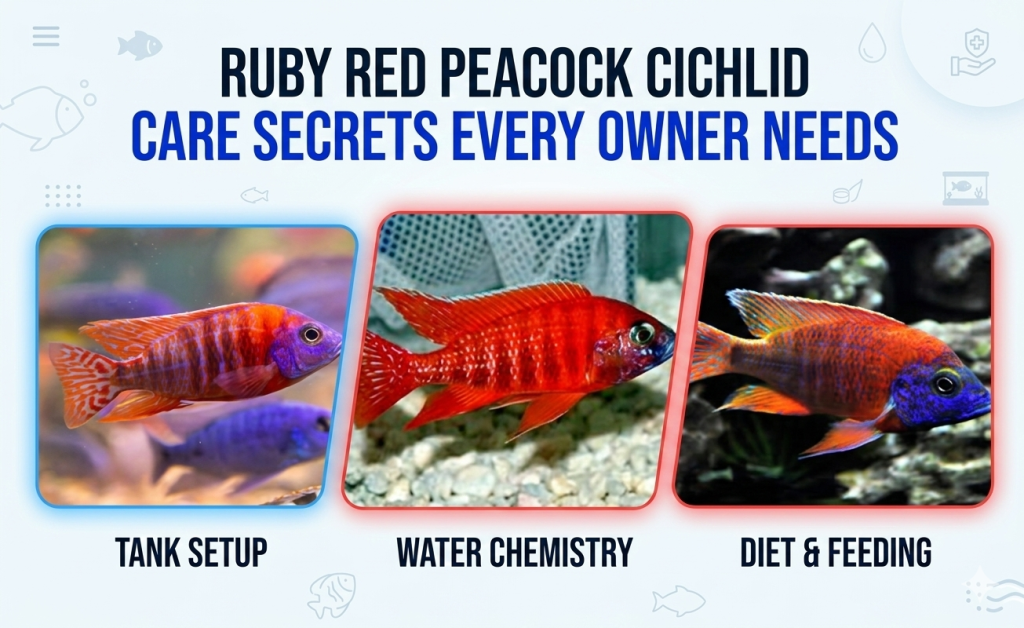
How to Set Up the Perfect Tank for Ruby Red Peacock Cichlids?
A tank of at least 55 gallons with stable water conditions and adequate hiding areas is recommended.
- Tank Size & Shape: Rectangular aquariums have more swimming space than square ones.
- Substrate & Decorations: Their natural rocky environments can be modeled with fine sand, rock caves, and driftwood. Sharp decorations should be avoided because they can stress or injure the fish.
- Water Conditions: Optimal pH 7.8–8.6, hardness 10–20 dGH, temperature 24–28°C (75–82°F). Rarely mentioned is the impact of gentle water flow patterns; peacock cichlids prefer slow-moving currents that simulate lake edges.
| Parameter | Optimal Range |
| pH | 7.8–8.6 |
| Hardness | 10–20 dGH |
| Temperature | 24–28°C (75–82°F) |
| Water Flow | Gentle, slow currents to simulate lake edges |
Floating plants should be used sparingly to diffuse light, reduce stress, and enhance natural coloration.
What Should You Feed Your Ruby Red Peacock Cichlid?
A high-protein diet supplemented with natural color enhancers from time to time helps maintain health and vibrant red coloration.
- Staple Diet: Pellets rich in spirulina, krill, and brine shrimp enhance bright coloration.
- Occasional Treats: Live or frozen foods such as daphnia or bloodworms stimulate the predatory instinct.
- Uncommon Tip: Small feeding sessions, 3-4 times per day, help maintain vivid coloration, whereas one large feeding session may fade the red color.
- DIY Color Enhancer: Add a pinch of carotenoid-rich foods, e.g., red bell pepper puree, to naturally deepen reds once a week.
Read more: Why the Red Terror Cichlid Deserves a Spot in Your Aquarium
Understanding Ruby Red Peacock Cichlid Behavior
They are not extremely aggressive but do establish complex social hierarchies in group tanks.
- Aggression Management: Keep 1 male for every 3-4 females to reduce territorial aggression.
- Compatibility: Avoid highly aggressive species; they are most compatible with peaceful African cichlids.
Daily changes in color and behavior can occur depending on light exposure, tank arrangement, and social interactions. Stress-fading colors are minimized with gradual light changes.
How Do Ruby Red Peacock Cichlids Breed Successfully?
Ruby red peacock cichlids are mouthbrooders that require specific conditions to spawn successfully.
- Spawning Tank Setup: Use a separate 30–40 gallon tank with flat rock formations and minimal water movement. Avoid overcrowding.
- Pair Selection: Add 1 dominant male and 3-4 females to reduce stress and territorial fights.
- Water Parameters: Slightly higher pH (8.0–8.6) and warmer temperatures (26–28°C) help stimulate breeding.
- Fry Care: Adults should be removed or monitored closely after spawning to prevent fry predation. Feed flake food, finely crushed, with fortified spirulina.
Mostly hobbyists fail to recognize the subtle details of male display behavior, including tail-fanning and head-shaking, which indicate readiness to breed. Through these cues, greater success can be attained.
Common Health Issues and How to Prevent Them
Stress, poor water quality, and inadequate diet are the leading causes of illness in ruby red peacock cichlids.
- Swim Bladder Problems: This is normally due to an abrupt temperature switch or excessive feeding. Keep temperatures constant.
- Fin Rot & Skin Lesions: This is caused by inadequate hygiene or violent tankmates. Regular partial water changes help reduce this risk.
- Color Fading: This may be due to poor carotenoid levels, stress, or mineral deficiency. Add natural color enhancers such as krill or spirulina flakes.
Prevention Checklist (Bullet Points):
- Change water weekly (25 percent).
- Periodically check PH and hardness.
- Feed a balanced, high-protein diet 3–4 times per day.
- Avoid overcrowding and aggressive tankmates.
- Offer stress relief by providing means of hiding and environmental enrichment.
Advanced Care Secrets Only Expert Owners Know
Expert care consists of dietary optimization, environmental enrichment, and behavioral monitoring to maximize health and color.
- Lighting Strategies: Lights are introduced into the tank gradually over a few hours to appear as a natural sunrise. This removes stress and enhances red color.
- Micro-Mineral Supplementation: Trace minerals such as magnesium and calcium help strengthen bones and fins; however, they are not found in novice guides.
- Behavioral Enrichment: Change the rocks and decorations every month to prevent boredom and encourage natural foraging behavior.
- Color Maximization Tip: Feed carotenoid-rich live foods twice a week to naturally intensify red coloration.
Read more: Discovering the Stunning Red Peacock Cichlid: Care and Colors
Case Study: Social Structure and Breeding Success in African Peacock Cichlids
A study on Aulonocara nyassae, a Lake Malawi peacock cichlid, revealed that male dominance and social hierarchy directly affect growth, reproductive success, and breeding behavior in captivity.
Researchers housed groups of males and females in controlled aquaria and observed that dominant males displayed higher courtship success, while proper male-to-female ratios reduced stress and improved fry survival.
This highlights the critical importance of tank social structuring, hiding spots, and monitoring male behavior for successful breeding and overall health.
The insights are directly applicable to ruby red peacock cichlid care, guiding hobbyists in creating balanced, thriving aquarium communities.
Conclusion
Caring for ruby red peacock cichlids requires more than a simple tank setup. The knowledge of their distinct behaviors, food requirements, and environmental preferences will guarantee healthy, vibrant, and prosperous fish.
The most important factors for improving coloration, stress reduction, and breeding success are stable water parameters, a high-protein diet supplemented with carotenoids, a proper tank social structure, and behavioral enrichment.
By noticing the finer details, such as male displays and changes in color day-to-day, owners can intervene early and maximize care.
With these secrets of care and the knowledge gained by the Africa-based studies, hobbyists can establish a beautiful, long-term, successful aquarium environment.
Adopt these lesser-known care tips and check outPeacock Cichlid Zone to get expert advice, materials, and other tips to help you take your aquarium to the next level.
FAQs
1. What is the size of the Ruby Red Peacock Cichlid?
The ruby red peacock cichlids typically measure 4-6 inches (10-15 cm) in size. Males are larger and more colorful than females, and females are only slightly smaller and lighter-colored.
2. Difference between Ruby Red Peacock Cichlid male or female?
The males are brighter red, have long-tailed fins, and are territorial. The females are smaller, lighter, and they are not aggressive; they can be kept in community tanks with more than one male.
3. How big do Ruby Red Peacocks grow?
The average size of adult Ruby Red Peacock Cichlids is 4-6 inches (10-15 cm). Adequate diet, water conditions, and tank conditions promote optimum growth and bright coloration.
4. What is the minimum tank size for a Ruby Red?
A small group of 55 gallons is suggested because it will offer a chance to swim, find a hiding place, and have proper water conditions that eliminate stress and aggression.
5. Are Ruby Red Peacocks aggressive?
They are moderately aggressive, particularly males. They claim territories; hence, adequate spacing, concealed areas, and suitable tank companions assist in minimizing conflicts.
6. What are the ideal water parameters (pH and temperature)?
Keep pH at 7.8-8.6 and temperature at 24-28 °C (75-82degF). Their Lake Malawi natural habitat is replicated by the constant hardness of the water and slow-flowing currents.
7. What is the best food to enhance their red color?
Foods rich in protein, such as spirulina, krill, or flakes with high carotenoid content, increase redness. Live or frozen foods can be offered occasionally to enhance vitality and well-being.
8. What are the best tank mates for them?
Ideally, they are peaceful African cichlids or other similarly sized non-aggressive species. To maintain harmony and reduce stress, avoid aggressive tankmates.
9. Do they need a sand or gravel substrate?
Fine sand is used, which imitates natural environments and permits burrowing. Gravel can harm fragile fins or disrupt mating.
10. How long is their average lifespan?
Ruby Red Peacock Cichlids have a lifespan of 8-12 years with appropriate care, including stable water conditions, a balanced diet, and low-stress environments.
11. Why is my Ruby Red Peacock losing its color?
The loss of color is usually a result of stress, unhealthy eating, or a lack of minerals. To recover the vibrancy, ensure proper water quality, high-carotenoid food, and compatible tank mates.
12. How many females should be kept per male?
Keep the ratio of 3-4 females to 1 male so the male aggression is minimized, the social life becomes more balanced, and natural breeding behavior is stimulated.
References:
Oxford Academic / Behavioral Ecology
Female Preference for Male Color Is Necessary and Sufficient for Assortative Mating in Cichlid Sister Species
https://academic.oup.com/beheco/article/25/3/612/2900483
ScienceDirect
Sexual Dichromatism in Convict Cichlids, Ethological Significance of Female Ventral Coloration
https://www.sciencedirect.com/science/article/abs/pii/S0003347298908685
Carotenoid Pigmentation in Salmon, Variation in Expression at BCO2-l Locus
https://pubmed.ncbi.nlm.nih.gov/31615356/
Aulonocara rostratum, Species Summary
https://www.fishbase.se/summary/SpeciesSummary.php?genusname=Aulonocara&speciesname=rostratum
Fish Nutrition and Feeding in Freshwater Aquaculture
