


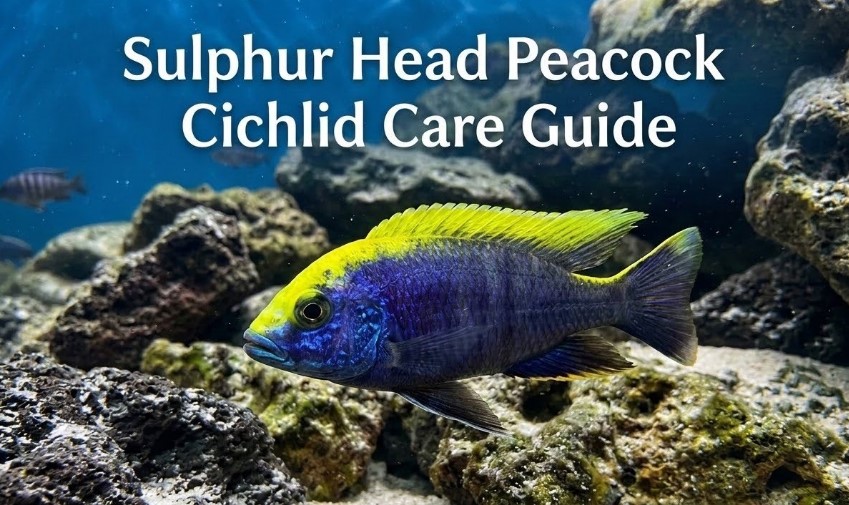
Aquarium hobbyists often consider fish with bright colors, but maintaining the color bright is not easy. One of the most outstanding African cichlids is the Sulphur Head Peacock. They possess yellow heads contrasting with bright blue bodies.
The reason is that most aquarists fail to keep this fish in good, colorful conditions due to improper tank conditions and feeding behaviors.
There are 800 to 2,100 species of them found at Lake Malawi (source). It is important to know its natural environment to provide proper care at home.
From rarely discussed sensory hunting behavior to stress-caused color changes, this guide covers all you need to ensure your Sulphur Head Peacock Cichlid’s success!
What Is a Sulphur Head Peacock?
Aulonocara maylandi also known as Sulphur Head Peacock is a yellow crowned blue bodied African cichlid.
Sulphur Head Peacocks are a species of peacock cichlids, and they are extremely diverse in appearance. The Sulphur Head Peacocks, however, have a sensitive organ on the jaw, known as a sensory pore, which helps to detect prey buried in sand, unlike most cichlids.
This feeding behavior attracts much interest among hobbyists since they can observe animals in their natural feeding behaviors. This is an unusual way of hunting that makes these fish very interesting to hobbyists who want to watch how animals naturally feed. Sensory adaptation is something that hobbyists often underestimate in fish.
In the absence of fine sand substrates, their fish cannot feed properly, and stress levels rise, and colour intensity is reduced.
Where Does Aulonocara maylandi Live in the Wild?
The Sulphur Head Peacock is found in the sandy parts of the Eccles Reef in Lake Malawi, where it inhabits amongst rocks and cracks, feeding on invertebrates which are found on sandy surfaces.
Knowledge of their natural environment helps aquarists recreate it effectively in their tank environment.
KEY HABITAT FEATURES
- Water Type: Freshwater
- Temperature Range: 24-28 °C
- pH Level: (7.5-8.5)
- Substrate Type: Sandy and Rocky Outcroppings
Simple microhabitats, such as shallow sandy feeding grounds along rock interstices, are effective in natural behaviour and inhibiting territorial aggression in male peacocks.
Read More: Peacock Cichlid Fish Guide for Beginners and Enthusiasts
Why Is the Sulphur Head Peacock So Popular?
The Sulphur Head Peacock is a great addition to home aquariums due to its bright color and the ability to manage its personality. It is especially noticeable, as its yellow crown is bright and its body is blue and glittery, makes it a center of attention in any tank.
Aquarists like its relatively calm nature compared to other Malawi cichlids. It is controllable and fits in mixed cichlid communities.
Key appeal factors:
- Brilliant color contrast
- Moderate aggression level
- Easy adaptation to captivity
What Is the Ideal Size, Lifespan, and Growth Rate?
Adult males typically reach a height of 5-6 inches, with females being slightly shorter. They live for 5–8 years.
The size of a sulphur head peacock cichlid changes little depending on what it eats and how the tank is set up.
Growth depends on:
- Protein-rich diet
- Water quality consistency
- Stress-free environment
What Tank Setup Works Best for Sulphur Head Peacock?

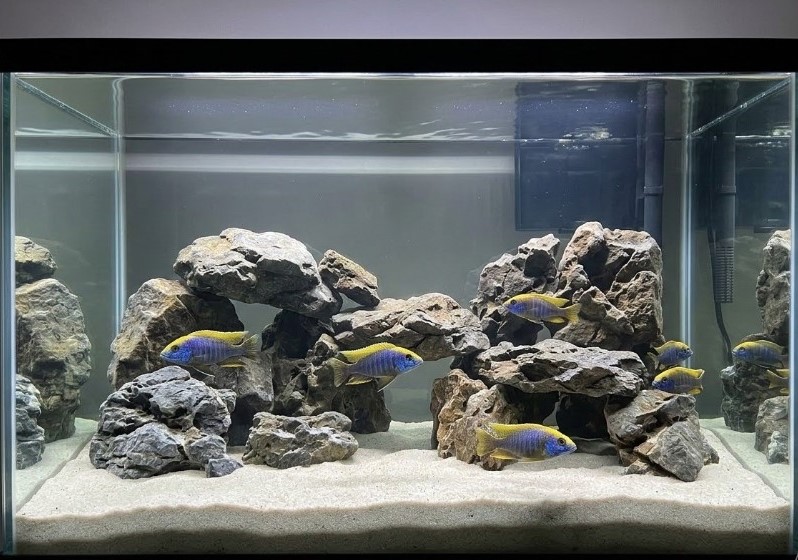
At least a 55-gallon tank with fine sand and large rock formations to imitate their natural environment.
Add caves and hiding places to replicate its natural habitat. Use fine sand since this fish sifts substrate while feeding.
Focus on African cichlid aquarium setup and stable aquarium water parameters for success.
Tank Setup Essentials
- Minimum of 55 gallons
- Set up a good filtering system
- Not too bright light
- Rockwork to create territories
What Do Sulphur Head Peacocks Eat?
A diet high in protein and low in plant matter is good for their health and color.
They eat small invertebrates that are buried in sand in the wild. Care for captive animals should include:
- Pellets for cichlids that are of high quality
- Brine shrimp or bloodworms
- Sometimes spirulina or vegetable matter
Feeding in the sand layer makes the animals act like they are hunting, which makes them more active, less bored, and makes the yellow crown and iridescent blue body look better.
Are Sulphur Head Peacocks Aggressive or Peaceful?
They are moderately aggressive, especially males, during breeding or territory disputes.
While generally calmer than Mbuna cichlids, Sulphur Head Peacocks exhibit territorial behaviors. Observing their interactions helps hobbyists manage tank stress.
Aggression often rises around places where they eat or their favorite caves. Strategic feeding stations and a lot of places to hide help keep the peace and reduce fights.
Tips for managing aggression:
- Keep one male per tank if space is limited
- Provide multiple rock caves for female refuge
- Avoid overcrowding to reduce stress
Best Tank Mates for Aulonocara maylandi
Peaceful to semi-aggressive cichlids are ideal companions.
Compatible species include:
- Other peacock cichlids (Sulfurhead Aulonocara)
- Haplochromis species
- Non-aggressive Malawi cichlids
Avoid aggressive Mbuna species to prevent stress and color fading.
Matching fish by temperament rather than size improves survival rates. Combining a Sulphur Head Peacock with overly aggressive or timid species can compromise health and behavior.
How to Identify Male vs Female Sulphur Head Peacock
Males are larger and more colorful; females are smaller and duller.
Differences include:
- Males: Bright neon yellow crown, deep blue body, dominant behavior
- Females: Subtle grayish tones, smaller size, passive behavior
Color intensity is influenced by stress, diet, and tank setup. Even females may brighten slightly in optimal conditions, which is rarely discussed in mainstream guides.
Breeding Sulphur Head Peacocks in Captivity
They are mouthbrooders, and successful breeding requires stable water and privacy.
Key steps:
- Prepare a separate breeding tank (30–40 gallons minimum)
- Maintain stable pH (7.8–8.2) and temperature (26–28°C)
- Offer a high-protein diet to trigger spawning
- Males court females near rock caves
Allow females to mouthbrood undisturbed for 21–28 days. Stress during this period reduces fry survival and may cause females to swallow fry prematurely.
Why Do Sulphur Head Peacocks Lose Color?
Stress, poor diet, or water instability are the main causes.
Common factors causing color fading:
- Overcrowding or territorial disputes
- Inadequate nutrition (low-protein diets)
- Fluctuating water parameters (pH, temperature)
Using sand-based feeding encourages natural foraging, reducing stress and enhancing coloration. Adding spirulina-rich foods also boosts the yellow crown.
Sulphur Head vs Blue Orchid Peacock
The Sulphur Head features a bright yellow head, whereas the Blue Orchid is fully blue.
| Feature | Sulphur Head Peacock | Blue Orchid Peacock |
| Head Color | Neon Yellow | Deep Blue |
| Body Color | Iridescent Blue | Uniform Deep Blue |
| Behavior | Moderate aggression | Slightly higher aggression |
| Popularity | Highly sought after | Very popular |
Buyers often choose Sulphur Head for color contrast in aquascaped tanks, whereas Blue Orchid adds uniform elegance.
Real Aquarium Case Study
A hobbyist documented their success with aulonocara maylandi sulfur head peacock on Fishkeeping World:
https://www.fishkeepingworld.com/
They improved coloration by upgrading filtration and adding protein-rich food. Within 6 weeks, the fish regained its bright yellow hue.
This proves that small changes can deliver dramatic results.
Expert Tips Most Hobbyists Don’t Know
- Maintain stable water parameters
- Use sand substrate for natural feeding
- Provide hiding spaces to reduce stress
- Feed a balanced and varied diet
Observing subtle behavioral cues, such as fin flaring or sand sifting, can predict mating readiness and aggression patterns.
Read More: 200 Peacock Cichlids List: Species, Types, Names, and Color Variants
Conclusion
The Sulphur Head Peacock is a striking, rewarding addition to home aquariums. Success depends on:
- Proper tank setup and habitat replication
- Nutrient-rich diet and sand-based feeding
- Stress Alleviation and Social Management.
As hobbyists embrace these advanced insights, they can make sure that fish stay radiant and healthy, allowing them to shine bright like their fluorescent yellow crown on an iridescent blue body with pride. For your Peacocks, visit Peacock Cichlid Zone for expert guides and resources.
FAQs
What is the scientific name of the Sulphur Head Peacock cichlid?
Its scientific name is Aulonocara maylandi.
How big do Aulonocara maylandi get when fully grown?
Their size ranges between five and six inches.
What is the difference between a Sulphur Head and a Blue Orchid Peacock?
A Sulphur Head sports yellow feathers, and Blue Orchids have all-blue wings.
Are Sulphur Head Peacocks aggressive toward other fish?
The males may also be aggressive during the breeding season.
What is the ideal tank size for a Sulphur Head Peacock?
There should be at least 55-gallon tank space.
Why is my male Sulphur Head Peacock losing its yellow color?
Possible causes of color fading are stress, inappropriate diet, or varying water conditions.
What are the best tank mates for Aulonocara maylandi?
Other peaceful cichlid species, such as peacocks and haps, are ideal.
How can you tell the difference between a male and a female Sulphur Head?
Males are brighter and larger, while females are duller and smaller.
What is the best diet for a Sulphur Head Peacock to enhance its colors?
Males are larger and brighter, and females are smaller and duller.
References:
Aulonocara maylandi (Sulphurhead Peacock): a highly-regarded, citation-backed species profile covering habitat, taxonomy, and care.
https://www.seriouslyfish.com/species/aulonocara-maylandi-maylandi/
Sulfurhead aulonocara: good for general taxonomic and conservation status info (useful as a neutral tertiary source).
https://en.wikipedia.org/wiki/Sulfurhead_aulonocara
Sulphurhead Peacock species care sheet, a long-established UK fishkeeping authority site.
https://www.fishkeeper.co.uk/fish/freshwater/cichlids/sulphurhead-peacock
Sulfur Head Peacock Care Guide: detailed guide with taxonomy background (Trewavas, Tawil & Allgayer) and species-specific care notes.
https://aquariumstoredepot.com/blogs/news/sulfur-head-peacock
Aulonocara maylandi: cites primary scientific literature (Ad Konings, Cichlid Press) and gives detailed water parameters.
https://www.fishi-pedia.com/fishes/aulonocra-maylandi