


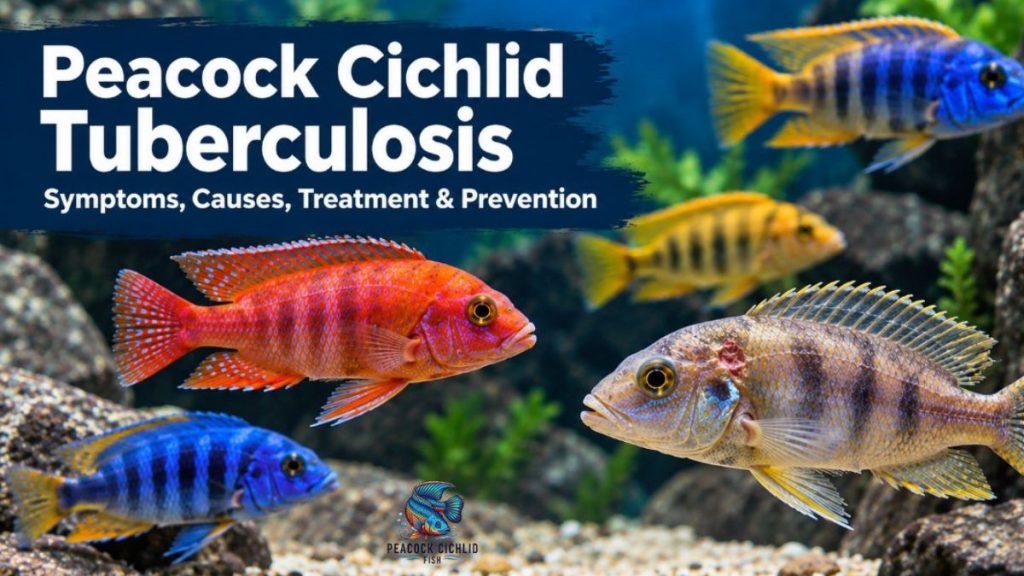
Peacock cichlids bring stunning colors and personality to freshwater aquariums. Watching these beautiful fish lose weight, fade in color, or struggle to swim can worry any aquarium owner.
Peacock cichlid tuberculosis deserves special attention because the disease can progress slowly. Early symptoms often resemble other common fish health problems, making it hard to recognize.
Fish tuberculosis, also called fish mycobacteriosis, describes a bacterial infection that can affect peacock cichlids (Aulonocara species). The disease can damage internal organs, cause severe weight loss, and sometimes lead to death.
Understanding the warning signs helps aquarium owners respond sooner and protect other fish. This guide explains the causes, symptoms, diagnosis, treatment options, prevention steps, and human health risks.
What Is Peacock Cichlid Tuberculosis?
Peacock cichlid tuberculosis is a long-lasting bacterial infection that can affect a fish’s internal organs, skin, and overall health. Several environmental bacteria from the Mycobacterium genus can cause this disease.
Common species include Mycobacterium marinum, Mycobacterium fortuitum, and Mycobacterium chelonae. These bacteria affect various aquarium fish, though risk varies by species.
Despite its name, fish tuberculosis differs from the tuberculosis that commonly affects humans. Fish mycobacteriosis often develops gradually, so obvious symptoms may appear late.
Some infected fish show few warning signs at first. Others develop a thin body, skin sores, spinal changes, or persistent weakness.
According to the Merck Veterinary Manual, no treatment reliably eliminates mycobacteria from infected fish. Prevention, early recognition, and careful disease management therefore matter greatly.
What Causes Tuberculosis in Cichlids?
Mycobacteria in aquatic environments, infected fish, and contaminated equipment can introduce the infection into an aquarium. Stress and poor environmental conditions can also increase disease risks.
Common Causes and Risk Factors
Several factors can contribute to fish tuberculosis:
- Infected fish: New arrivals may introduce bacteria into an established aquarium.
- Shared equipment: Nets, buckets, siphons, and decorations can carry contaminated material between tanks.
- Poor water quality: Low oxygen, excess waste, and unsuitable water conditions can increase disease pressure.
- Chronic stress: Aggression, overcrowding, transport, and sudden environmental changes can weaken fish health.
- Infected remains: Fish may encounter bacteria when they scavenge infected tissue or dead tankmates.
Mycobacteria can live in aquatic environments without causing obvious disease in every fish. Their presence alone does not confirm an active outbreak.
How Do Fish Get Tuberculosis?
Fish can encounter mycobacteria through contaminated water, infected tissue, or contact with contaminated aquarium surfaces. The exact route depends on the bacterial species and the conditions involved.
An infected fish may release bacteria through body fluids, waste, or skin lesions. Other fish can then encounter the organisms within the shared environment.
Quarantine helps reduce the risk of introducing infected fish. However, visual checks cannot detect every infection, especially during its early stages.
What Are the Early Warning Signs of TB in Cichlids?
Early warning signs include unexplained weight loss, fading colors, reduced activity, and changes in appetite. These symptoms raise concern but cannot confirm tuberculosis.
Watch for these changes in peacock cichlids:
- Progressive wasting
- Hollow belly
- Color changes
- Low activity
- Spinal changes
- Skin sores
- Bulging eyes
- Abdominal swelling
Symptoms vary between fish. Some develop only a few warning signs, while others decline more noticeably.
What Do Cichlid Tuberculosis Pictures Show?
Cichlid tuberculosis pictures may show severe wasting, curved spines, skin ulcers, or raised lumps. Veterinary examinations may also reveal small nodules inside affected organs.
However, pictures cannot reliably distinguish tuberculosis from other bacterial infections, parasites, or nutritional problems.
Use photographs to document changes in your fish, rather than diagnosing from appearance alone. A qualified aquatic veterinarian can recommend appropriate testing.
Can Cichlid Hollow Belly Indicate Fish TB?
Yes, hollow belly can accompany fish tuberculosis, but several other conditions can cause the same appearance. Intestinal parasites, poor nutrition, and other chronic illnesses can also lead to wasting.
Look for additional warning signs, such as persistent sores, spinal changes, reduced activity, or unexplained deaths.
Check water quality, review feeding habits, and consider recent changes within the aquarium. Seek professional advice when weight loss continues despite appropriate care.
A hollow belly alone does not confirm tuberculosis. Likewise, a fish that continues eating may still have an underlying illness.
Is Cichlid Black Head Disease the Same as Fish TB?
No. Black head disease describes dark discoloration around the head, rather than a confirmed diagnosis of fish tuberculosis.
Stress, injuries, environmental changes, and other illnesses can cause color changes. Mycobacteriosis may also affect coloration, but dark patches alone provide little diagnostic evidence.
Check water parameters and watch for other symptoms. Avoid treating discoloration as tuberculosis without further investigation.
How Do Veterinarians Diagnose Fish Mycobacteriosis?
Veterinarians diagnose fish mycobacteriosis through clinical assessment, tissue examination, and specialized laboratory tests. External symptoms alone cannot confirm the infection.
A fish health professional may recommend these steps:
- Health assessment: Review symptoms, aquarium conditions, feeding habits, and recent fish introductions.
- Microscopic examination: Examine tissue samples for inflammation, nodules, and acid-fast bacteria.
- Laboratory testing: Use bacterial culture or molecular methods to identify the organism.
Mycobacteria can grow slowly, so laboratory confirmation may take time. Some tests also require specialized facilities.
Do not dissect sick fish or collect tissue samples without appropriate guidance. A veterinarian can explain safe handling and sample preparation.
What Is the Best Cichlid Tuberculosis Treatment?
No treatment reliably eliminates established mycobacteriosis from aquarium fish. A veterinarian can assess individual cases and recommend suitable management options.
1. Separate Sick Fish When Appropriate
Move a visibly ill fish into a dedicated hospital tank when separation will not create unnecessary stress. Use separate nets, buckets, and maintenance tools.
Remember that the main aquarium may already contain bacteria. Moving one fish does not eliminate the risk to its tankmates.
2. Improve Water Quality
Test ammonia, nitrite, nitrate, pH, and temperature regularly. Maintain suitable oxygen levels and stable conditions for peacock cichlids.
Remove uneaten food and excess waste. Perform appropriate water changes while preserving beneficial filter bacteria.
Good water quality supports fish health, but it cannot cure tuberculosis.
3. Avoid Unsupervised Medication
Do not experiment with antibiotics or combine medications without veterinary guidance. Mycobacteria often resist treatment, and inappropriate medication can cause additional problems.
A veterinarian can assess whether any treatment offers a reasonable benefit. Severe illness may require humane euthanasia to prevent unnecessary suffering.
4. Consider UV Sterilization
A properly installed UV sterilizer can reduce susceptible free-floating bacteria in water passing through the unit. It cannot remove bacteria inside infected fish or sterilize every aquarium surface.
Use UV equipment as one possible disease-control measure, not as a cure.
How Can You Prevent Fish TB From Spreading?
Quarantine, dedicated equipment, stable water conditions, and safe handling can reduce the risk of disease spread. However, these measures cannot guarantee a disease-free aquarium.
Quarantine new fish in a separate system for at least 30 days. Extend that period when symptoms or veterinary advice warrant extra caution.
Watch for unexplained weight loss, skin lesions, unusual swimming, and declining activity. Keep quarantine equipment separate from equipment used in established tanks.
Maintain effective filtration, adequate oxygen, sensible stocking levels, and a balanced diet. Remove dead fish promptly and investigate repeated unexplained losses.
If a veterinarian confirms mycobacteriosis, seek professional advice before restocking. Mycobacteria resist some common disinfectants, so routine cleaning alone may not eliminate them.
The Merck Veterinary Manual’s aquaculture guidance explains why mycobacteria require special attention during disinfection.
Never mix cleaning chemicals or apply disinfectants around live fish. Follow professional instructions for cleaning, rinsing, and preparing the aquarium before reuse.
Can Peacock Cichlid Tuberculosis Spread to Humans?
Yes. Certain fish-associated mycobacteria, especially Mycobacterium marinum, can infect people through broken skin exposed to contaminated water or fish.
Human infection can cause fish tank granuloma. Symptoms may include persistent bumps, swelling, or slow-healing sores on the hands and arms.
Protect yourself with these precautions:
- Wear waterproof gloves when cleaning a suspected aquarium or handling sick fish.
- Cover cuts and scratches before aquarium maintenance, or avoid the task until wounds heal.
- Wash your hands thoroughly after handling aquarium water or equipment.
- Never siphon aquarium water by mouth.
- Ask someone else to maintain the tank if you have a weakened immune system.
If a sore develops after aquarium exposure and fails to heal, contact a healthcare professional. Explain the fish tank exposure because it may help guide diagnosis.
The CDC’s aquarium safety guidance provides additional advice about protective practices and infection prevention.
Final Thoughts
Peacock cichlid tuberculosis creates serious challenges because symptoms can resemble other diseases and treatment options remain limited. Early recognition and careful aquarium management help owners make informed decisions.
Watch for changes in body condition, color, activity, and skin health. Maintain stable water conditions, quarantine new arrivals, and protect your skin during aquarium maintenance.
Most importantly, never assume that wasting or spinal changes automatically confirm tuberculosis. A qualified aquatic veterinarian can help identify the likely cause and guide responsible next steps.
Also Read: 18 Peacock Cichlid Disease: Symptoms, Causes, and Treatment Guide
FAQs
Can Peacock Cichlid Tuberculosis Be Cured?
No reliable treatment eliminates established fish mycobacteriosis. An aquatic veterinarian can assess the fish, discuss welfare decisions, and recommend appropriate management.
How Long Does Fish Tuberculosis Take to Develop?
The disease often progresses over weeks or months, although the timeline varies. Some fish show few obvious symptoms until their condition worsens.
Can Healthy-Looking Fish Carry Mycobacteria?
Yes. Fish may carry mycobacteria without obvious external symptoms. Quarantine reduces risk, but visual checks cannot rule out infection.
Should I Replace Everything in an Infected Aquarium?
Not necessarily. Ask an aquatic veterinarian about appropriate disinfection, equipment replacement, and safe disposal. Porous materials and complex equipment can prove difficult to disinfect thoroughly.
Can Fish TB Spread Between Different Cichlid Species?
Yes. Several fish species can develop mycobacteriosis, so other cichlids may face exposure in a shared system. Susceptibility and symptoms vary between species.
References:
Mycobacterial Infections in Aquarium Fish – Merck Veterinary Manual
https://www.merckvetmanual.com/exotic-and-laboratory-animals/aquarium-fish/bacterial-diseases-of-fish
Mycobacteriosis in Fish – University of Florida, IFAS Extension
https://edis.ifas.ufl.edu/VM055
Fish Tank Granuloma and Other Fish-Related Diseases – CDC
https://www.cdc.gov/healthy-pets/about/fish.html
Management of Aquarium Fish – Merck Veterinary Manual
https://www.merckvetmanual.com/exotic-and-laboratory-animals/aquarium-fish/management-of-aquarium-fish
Environmental Diseases of Aquatic Animals – Merck Veterinary Manual
https://www.merckvetmanual.com/exotic-and-laboratory-animals/aquatic-systems/environmental-diseases-of-aquatic-animals-in-aquatic-systems