


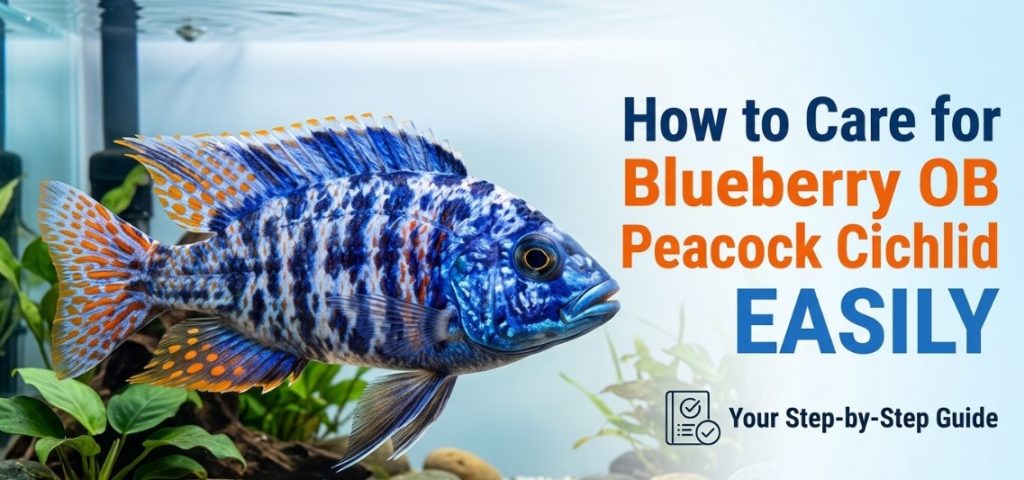
The Blueberry OB Peacock Cichlid is a good fish to keep in your aquarium, in case you have ever wished to have a fish that really stands out in your aquarium. The bright blue coloration with slightly orange blotches makes it an eye-catcher. These are hybrids, selectively bred from Malawi peacocks, and they add a burst of color and vitality that few other freshwater fish can possess.
Lake Malawi has more than 800 species of cichlids and is considered one of the richest freshwater ecosystems in the world (aquapparel.com). This variety encourages hobbyists to seek hybrids such as the Blueberry OB that achieve incredible looks in home aquariums.
Not every fish can turn a tank into a living masterpiece immediately, and that is the brilliance of the Blueberry OB Peacock that hobbyists take the time and effort to take care of.
What Makes This Hybrid Different From Other Peacock Cichlids?
The Blueberry OB is a hybrid, not a wild species. Unlike standard peacock cichlids, it features unique orange blotches on a rich blue base. Its “OB” lineage amplifies territorial behavior while maintaining remarkable color saturation.
Selective breeding leads to a boost in characteristics such as color vibrancy and home aquarium adaptation. This makes the Blueberry OBs easier to predict in their behavior and looks as compared to wild-caught peacocks.
Many guides overlook hybrid physiology, yet understanding it is crucial for diet, aggression management, and color optimization.
What Does “OB” Mean in Blueberry OB Cichlids?
“OB” stands for Orange Blotch. This genetic trait creates random orange patterns across the fish’s body.
In the ob blueberry cichlid, these patterns also influence behavior. Males often display their blotches to establish dominance. This reduces physical fighting when the tank is properly set up.
What Size Does a Blueberry OB Peacock Cichlid Reach?
Blueberry OB Peacocks kept in domestic aquariums normally reach 4 to 5 inches, but in some cases, males may grow faster, especially with good nutrition and water quality. Growth is influenced by tank size, diet, and the social structure.
Do not overfeed to develop faster, as this will lead to obesity and fin damage. Slow growth helps maintain better color and overall strength.
What Makes Their Blue Color So Unique?
The high coloration of the Blueberry OB is the result of a mixture of selective genetics and diet. In contrast to ordinary peacocks, the OB type hybrids preserve more reflective colors, creating some bright blue hues that are metallic in proper lighting.
Color boost: Natural carotenoid-rich diets, such as spirulina and krill flakes, increase the blueberry color. Stress reduction through proper tank design also helps maintain coloration.
Many guides ignore behavioral triggers for color intensity. Dominance hierarchy and territory security directly influence pigment brightness in OB males.
How Can You Identify Male vs Female Blueberry OB?
Males are usually bigger with longer dorsal fins and brighter blue coloration. Women tend to have duller colours with more orange spots.
Powerful males shine and guard the territory. Coloration alone is less reliable than behavioral observation, particularly in juveniles.

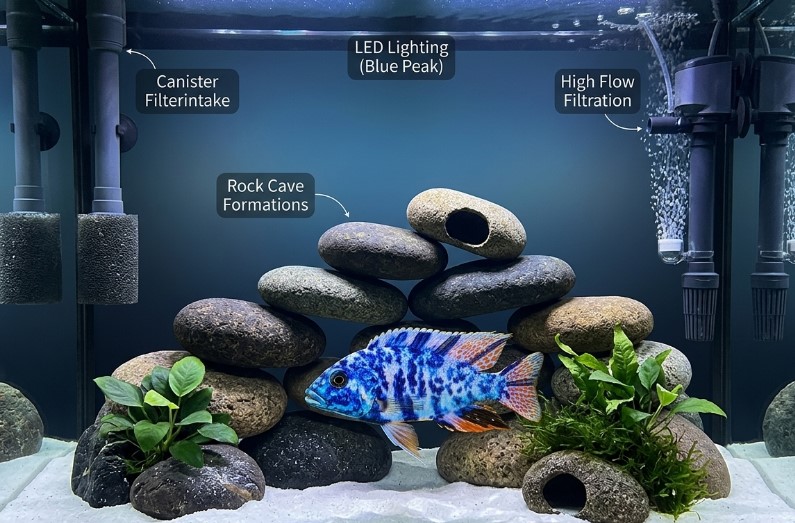
What Is the Ideal Tank Setup for Blueberry OB Peacock Cichlids?
A successful Blueberry OB aquarium creates a balance of territory, space, and water quality.
- Tank size: At least 30 gallons per fish; bigger tanks decrease conflicts.
- Substrate: Sand resembles Lake Malawi beaches, promotes natural excavation, and helps to avoid fin abrasion.
- Rockscape: There are several caves and other vertical obstacles that enable the creation of territory and its visual division.
- Filtration & flow: The quality of filtration supports oxygenation and waste removal, essential to health.
Organized tank reduces aggression. It also helps maintain stable social behavior.
What Water Parameters Do Blueberry OB Cichlids Need?
Stable water conditions are essential.
- pH: 7.8–8.6 (alkaline)
- Temperature: 23–27°C (73–80°F)
- Hardness: 10–20 dGH
The nitrogen cycle helps to ensure a low ammonia concentration. Stable water will keep your fish healthy and colored.
Are Blueberry OB Peacock Cichlids Aggressive?
Blueberry OBs are territorial by nature, but not inherently violent. Problems usually happen in small or poorly designed tanks. Male dominance displays prevent continuous fighting, provided territory zones are respected.
Use visual barriers and caves to diffuse tension. Grouping females can stabilize social dynamics, while multiple males require careful monitoring of tank layout.
What Do Blueberry OB Peacock Cichlids Eat?
The Blueberry OB Peacocks are opportunistic omnivores. A balanced diet in captivity is necessary for bright coloration and a long life.
- High-quality pellets: Staple food that supplies necessary protein and vitamins.
- Frozen or live foods: Blanched spinach, peas, or spirulina supplements help to prevent digestive problems.
- Vegetables: Blanched spinach, peas, or spirulina supplements help prevent digestive issues.
Combining plant and protein foods improves health. It also increases the color in your cichlid.
Which Foods Enhance Their Blue Color Naturally?
Carotenoid-rich foods such as krill, shrimp, and spirulina are the best foods to boost color in the Blueberry OB Peacock Cichlid.
- Foods that contain carotenoids: Krill, shrimp, spirulina.
- Color-selective pellets: The Malawi cichlids’ pellets.
- Occasional live insects: Activate natural pigment expression
Avoid feeding only flakes. A varied diet keeps colors deep and consistent.
What Are the Best Tank Mates for Blueberry OB Cichlids?
Blueberry OBs are semi-aggressive and require close companionship.
- Compatible fish: Other Malawi peacocks, mbunas of the same temperament, or larger, non-aggressive cichlids.
- Avoid: Small tetra, guppies, or slow-moving bottom dwellers that could be targets.
This species is not as difficult to maintain in a community tank as a blueberry oscar fish or blueberry oscar cichlid is when properly planned.
How Do You Control Aggression in a Cichlid Tank?
You control aggression by creating clear territories and reducing direct visibility.
- Territory mapping: Use rocks to divide space
- Multiple hiding zones: Reduces stress for subordinate fish and prevents color loss.
- Group females strategically: Female-only groups help maintain a calm social hierarchy.
Rearranging décor occasionally can reset territory and reduce tension.
Can Blueberry OB Peacock Cichlids Breed in Home Aquariums?
Yes, but hybrid breeding requires careful setup.
- Spawning setup: Use a separate 50+ gallon tank
- Water conditions: pH 8.0–8.5, temperature 25–27°C
- Parental behavior: Males guard territory while females care for eggs
Hybrid offspring may display variable blotch patterns and color intensity. Breeding can affect future aggression levels if multiple males are present.
Blueberry OB vs Blue OB Peacock vs Blueberry Oscar Cichlid
| Feature | Blueberry OB Peacock | Blue OB Peacock | Blueberry Oscar Cichlid |
| Size | 4–5 in | 4–6 in | 12–14 in |
| Aggression | Moderate | Moderate | High |
| Color | Intense blue w/ orange blotches | Blue w/ subtle orange | Blue w/ dark markings |
| Tank Size | 30–50 gal | 30–60 gal | 75+ gal |
| Compatibility | Similar semi-aggressive cichlids | Similar | Large aggressive fish |
Blueberry OB Peacock Cichlid Care Summary (Quick Table)
| Aspect | Recommendation |
| Tank size | 30+ gallons for single fish; larger for groups |
| Substrate | Sand for natural digging |
| Rocks | Multiple caves & vertical barriers |
| Water | pH 7.8–8.6, 23–27°C |
| Diet | High-quality pellets, frozen/live food, spirulina |
| Tank mates | Other semi-aggressive Malawi cichlids |
| Color boost | Foods high in carotenoids and stress management. |
Conclusion
Blueberry OB Peacock Cichlid is a beautiful hybrid species with stunning blue color, moderate aggression, and captivating behavior. Care, such as a large, well-designed tank, stable water conditions, and a carotenoid-rich diet, will guarantee maximum coloration and health.
Hobbyists can make their aquarium environment successful by understanding their hybrid origins, territorial instincts, and compatibility needs.
Their set-up and maintenance are rewarded with a fascinating focal point to any freshwater tank, whether you are an expert or a committed amateur. Today, discover professional advice and high-quality cichlids at PeacockCichlidZone.com.
FAQs
Is the Blueberry OB Peacock a naturally occurring species in Lake Malawi?
No, it is a hybrid selectively bred out of OB peacocks.
How large do Blueberry OB Peacocks grow in a home aquarium?
They typically reach 4–5 inches with optimal care.
What is the minimum tank size required for a healthy Blueberry OB?
At least 30 gallons for each fish; more when several are to be taken.
Are Blueberry OB Peacocks more aggressive than “pure” Peacock cichlids?
They are partially aggressive; aggression depends on social relationships and tank design.
What are the ideal water parameters (pH and temperature) for this hybrid?
The optimal pH is 7.8-8.6, and the constant temperature is 23-27 °C.
Can you keep more than one male Blueberry OB in the same tank?
Yes, with proper tank size, rockscape barriers, and territory zoning.
What are the best tank mates for a Blueberry OB Peacock?
Other semi-aggressive Malawi cichlids avoid small, slow, or shy species.
Why is my Blueberry OB Peacock losing its vibrant blue coloration?
Stress, dietary deficiencies, and unstable water parameters are the most common causes.
What specific diet or food helps enhance their “blueberry” colors?
Krill, spirulina, carotenoid-rich pellets, and occasionally live foods are used to add color.
How can you tell the difference between a male and a female Blueberry OB?
The males are larger and brighter with longer fins. Observe behavior and displays for accurate identification
References:
FishBase, Aulonocara spp. and Lake Malawi Cichlid Data
https://www.fishbase.se/
Seriously Fish, Lake Malawi Cichlid Care & Water Parameters
https://www.seriouslyfish.com/
Practical Fishkeeping, Understanding Cichlid Aggression and Tank Setup
https://www.practicalfishkeeping.co.uk/
Tropical Fish Hobbyist (TFH Magazine), Diet, Carotenoids, and Color Enhancement in Cichlids
https://www.tfhmagazine.com/
The Cichlid Room Companion, Lake Malawi Biotope and OB Genetics
https://cichlidae.com/